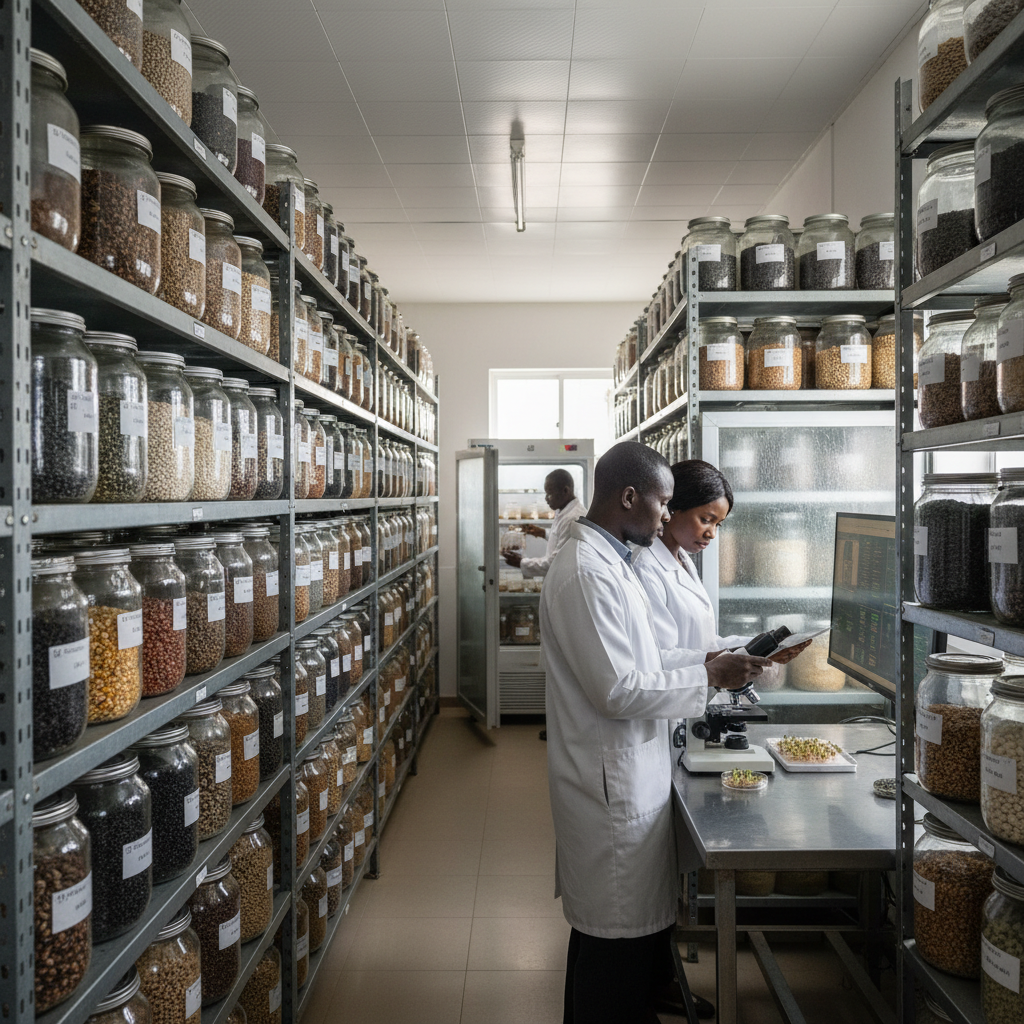
Ghana's national seed bank, managed by the Council for Scientific and Industrial Research (CSIR)–Plant Genetic Resources Research Institute, grapples with a severe funding shortfall. The institute stores more than 6,000 unique plant genetic resources critical for the country's agricultural heritage.
Dr. Daniel Ashie Kotey, the institute's Director, stated the facility receives limited operational support. This funding deficit threatens its ability to preserve vital plant materials. The institute's work underpins Ghana's food systems and supports future crop development.
This funding crunch highlights a broader challenge in Ghana's agricultural sector. Investment in foundational research and preservation is often overshadowed by more immediate production concerns. Robust seed banks are essential for climate change adaptation and long-term food sovereignty. Ghana’s reliance on indigenous crop varieties makes this institution particularly important. The disappearance of these varieties from farms and markets further escalates the urgency.
Dr. Kotey emphasized the bank's strategic value during Joy Business' Agribusiness Month. He described the institute as a critical national security installation. "Plant genetic resources are the basic building blocks for crop improvement," Dr. Kotey explained. He added, "Without them, you cannot improve crops." These resources also act as an insurance policy against climate change effects and other agricultural stresses.
The current government support mainly covers salaries, Dr. Kotey revealed. "Government only pays salaries." Releases for goods and services are infrequent and insufficient. "Even that one a year, it's not more than GHS 50,000," he disclosed. Maintaining a modern gene bank demands substantial investment in infrastructure and equipment. The institute needs approximately US$500,000 to upgrade its facilities to international standards. This upgrade will strengthen the long-term preservation of Ghana's genetic resources.
The implications of this funding gap are significant. Without adequate resources, the seed bank cannot effectively preserve plant diversity. This jeopardizes Ghana's ability to develop new crop varieties resistant to pests and diseases. It also hinders adaptation to changing climatic conditions. Sustainable agriculture and future food security depend on these preserved genetic resources. Decision-makers must consider the long-term economic and social costs of underfunding this critical institution. Protecting Ghana's genetic resources today will determine the country's capacity to feed future generations.
The institute currently relies on internally generated funds, such as selling seedlings. These funds barely support the maintenance of this vital natural resource. Protecting indigenous crop varieties is essential, especially as they disappear from farms. A strong gene bank is no longer optional but a fundamental requirement for the nation's future sustenance.