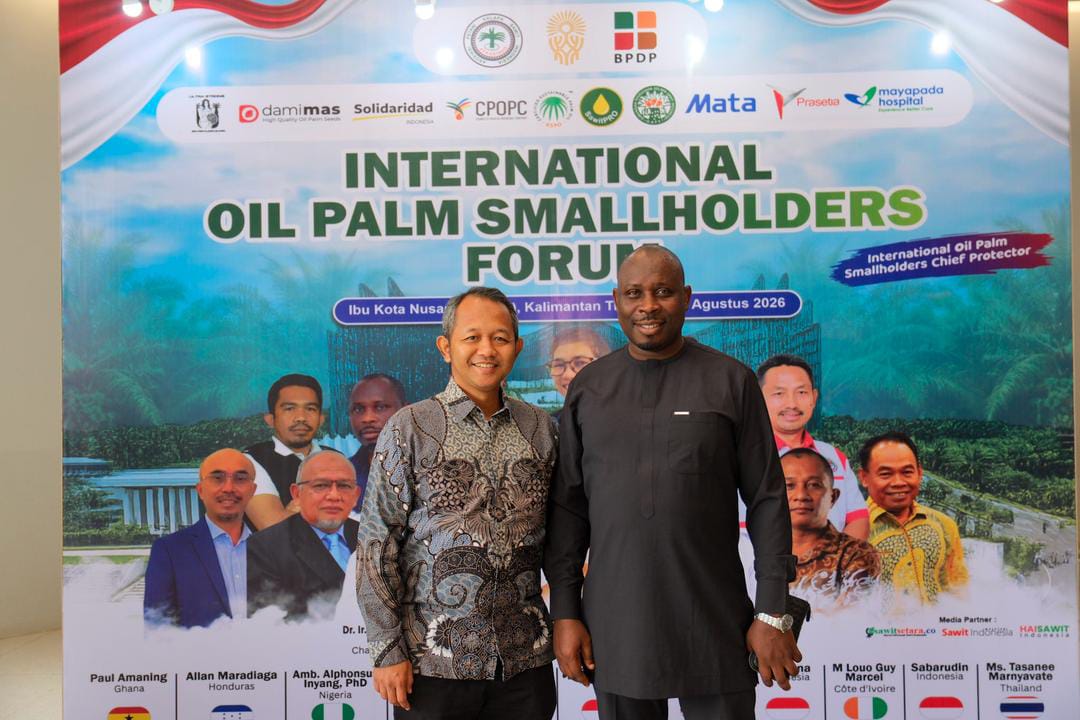
Ghana's oil palm industry requires a fairer value chain to support smallholder farmers. Paul Amaning, President of the Oil Palm Development Association of Ghana (OPDAG), made this clear at an international forum. He stressed that farmers need transparent and predictable pricing for their Fresh Fruit Bunches (FFB).
Amaning spoke at the International Oil Palm Smallholders Forum in Indonesia. He highlighted Ghana's experiences with FFB pricing and the challenges faced by smallholder farmers. The future of the global oil palm industry must include fair and sustainable livelihoods for farmers. Oil palm provides income, employment, and food security for millions of families.
This call for fairness fits into Ghana's broader economic strategy for agriculture. The Tree Crops Development Authority (TCDA) regulates and promotes tree crop subsectors. This includes oil palm, a key part of Ghana's agricultural output. Ensuring fair prices helps boost rural development and economic stability.
“Oil palm is not simply a commodity,” Amaning told forum participants. He explained that it provides income, employment, and food security for millions of families. He argued that a successful oil palm sector should not be judged only by production volumes. It must also be assessed by whether farmers can achieve sustainable incomes.
This focus on farmer welfare has significant implications for Ghana's agricultural sector. Transparent pricing can make farmer incomes more predictable. It can also improve their bargaining power. This strengthens coordination across the entire oil palm value chain. Processors also benefit from clearer raw material costs, boosting investment confidence.
Ghana's Tree Crops Development Authority Act, 2019 (Act 1010), established the TCDA. The Tree Crops Regulations, 2023 (L.I. 2471), set up a framework for a Minimum Producer Price for FFB. This minimum price acts as a floor, protecting farmers from unfair pricing. Actual prices can vary based on quality, location, and market conditions.
The statutory formula for pricing considers several factors. These include the value of crude palm oil and palm kernel oil. It also accounts for processing costs, margins, and transportation. The producer price is calculated and announced every month. This approach aims to protect farmers without harming processors' commercial viability.
Amaning emphasized that legislation alone cannot achieve these goals. Effective implementation requires reliable market information. Accurate weighing and measurement are also crucial. Timely communication of official producer prices is essential. Strong monitoring and enforcement are necessary for success.
Global oil palm markets face international price fluctuations. Exchange-rate movements also affect local currency values of commodities. Farmers need to understand how their price is calculated. This helps them plan production and make investment decisions. Weak information systems often disadvantage farmers.
The industry must protect farmers' interests while ensuring processors' commercial sustainability. “Farmers must receive fair returns,” Amaning stated. He added that consumers must be protected from unnecessary cost increases. Government must create an enabling regulatory environment. These objectives are interconnected parts of the same value chain.
When legitimate local products compete with smuggled goods, government revenue suffers. Legitimate investment can also be discouraged. Amaning called for coordinated policies to protect producers and processors. He advocated for smart regulation, effective enforcement, transparency, and collaboration. Financial institutions must also recognize oil palm as a long-term agricultural investment. New plantations take years to generate returns, requiring suitable long-term lending solutions for smallholders.