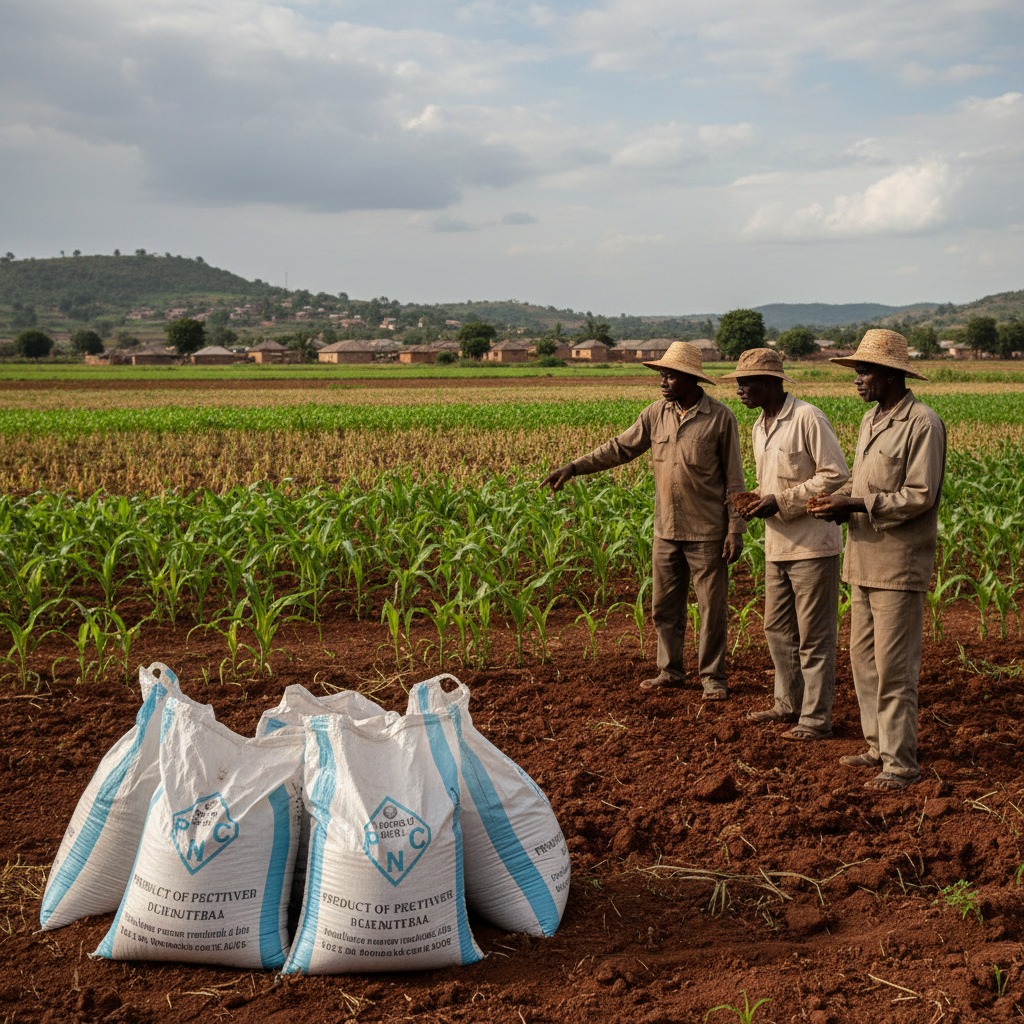
A senior soil scientist has warned that many imported fertilisers are damaging Ghana’s farmlands. Dr. Collins Tay of the Council for Scientific and Industrial Research (CSIR) states these products are often unsuited to local soil conditions. This situation risks worsening land degradation across the country.
Dr. Tay, who is the Director of the Soil Research Institute, reported that imported fertilisers frequently fail to enhance soil fertility. He explained that purchasing decisions often lack proper technical guidance from soil experts. This means fertilisers are applied incorrectly, leading to an imbalance of nutrients and reduced effectiveness for sustainable agriculture.
This concern impacts Ghana's vital agricultural sector significantly. Agriculture provides jobs for a large portion of the population. It also contributes substantially to the nation's Gross Domestic Product (GDP). The World Bank has previously projected sharp rises in global fertiliser prices, cautioning about potential food inflation risks. Improper fertiliser use could further depress local agricultural output, adding to economic pressures.
“The fertilisers that are imported into the country are not serving the optimal purpose,” Dr. Tay said on JoyBusiness’ Agric Business Month. He stressed that applying nitrogen, phosphorus, and potassium (NPK) when only phosphorus is needed, for example, adds too much nitrogen. This excess then enters the ecosystem, harming soil health.
More collaboration with specialist institutions like the Soil Research Institute can improve fertiliser importation and application. Experts can provide crucial assessments and guidance. Without this, Ghana risks severe long-term damage to its agricultural lands. This could affect food security and the livelihoods of millions of farmers.
Decision-makers must integrate expert advice into fertiliser procurement and distribution policies. The government’s drive to support farmers with fertiliser must ensure these products are appropriate. This strategic shift is crucial for preserving soil health and ensuring agricultural sustainability for Ghana’s future economic stability. Market responses may include shifts in agricultural investment and commodity prices if soil degradation continues.