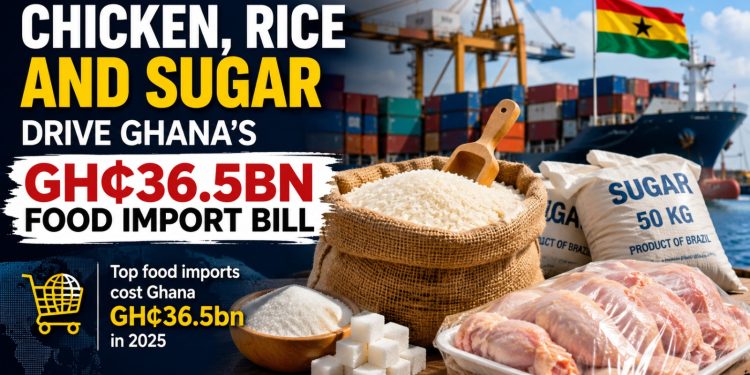
Ghana spent GHS 36.46 billion on food imports in 2025, according to the latest Annual International Merchandise Trade Statistics Report. This substantial amount highlights the nation's ongoing reliance on foreign markets for critical food supplies.
Processed cereal grains, frozen chicken, and rice were the primary drivers of this import bill. These categories alone accounted for a significant portion of the total expenditure, underscoring Ghana's dependence on external sources for staple foods and protein.
This trend fits into a broader narrative of Ghana's economic development, where agricultural output struggles to keep pace with domestic demand. The country's food import bill has consistently been a concern, impacting foreign exchange reserves and local agricultural development. Previous reports have also pointed to similar challenges in achieving food self-sufficiency.
The Ghana Statistical Service, which published the report, stated that the figures demonstrate Ghana's continued reliance on foreign markets. This reliance persists despite ongoing government initiatives aimed at boosting local agricultural production and promoting import substitution.
Looking ahead, decision-makers will need to address this growing import dependency. Increased investment in domestic food production, expanded agro-processing capabilities, and value addition initiatives are crucial. These steps are essential to reduce Ghana's food import bill, strengthen national food security, and build a more resilient agricultural sector.
Processed cereal grains topped the list of food imports, costing GHS 2.94 billion. This figure represented 8.1 percent of the total food import bill. Frozen chicken followed closely, with imports valued at GHS 2.84 billion.
Animal guts, bladders, and stomachs also contributed significantly, costing GHS 2.72 billion. Rice remained a major import, with semi-milled or wholly milled rice costing GHS 2.39 billion. Broken rice added another GHS 1.19 billion to the import total.
Other substantial food imports included sugar, frozen fish, palm oil, mangoes, and shea nuts. Together, processed cereal grains, frozen chicken, animal products, and rice made up about 30 percent of Ghana’s total food import expenditure. This concentration reflects the country's heavy reliance on imported staples and protein products.
The report also noted encouraging growth in value-added agriculture and agro-processing on the export front. Processed cocoa products, cashew nuts, tuna, and shea-based products were among Ghana’s leading food exports. This demonstrates the potential of Ghana’s agro-processing sector to generate foreign exchange.
The findings reveal both opportunities and challenges within Ghana’s agricultural economy. While the country earns foreign exchange from agricultural exports, it remains heavily dependent on imported food products for local consumption. Addressing this imbalance is vital for sustainable economic growth.
The report concludes that increasing domestic food production is paramount. Expanding agro-processing and investing in value addition will be essential. These measures are necessary to reduce Ghana’s food import bill, enhance food security, and build a more robust agricultural sector for the future.