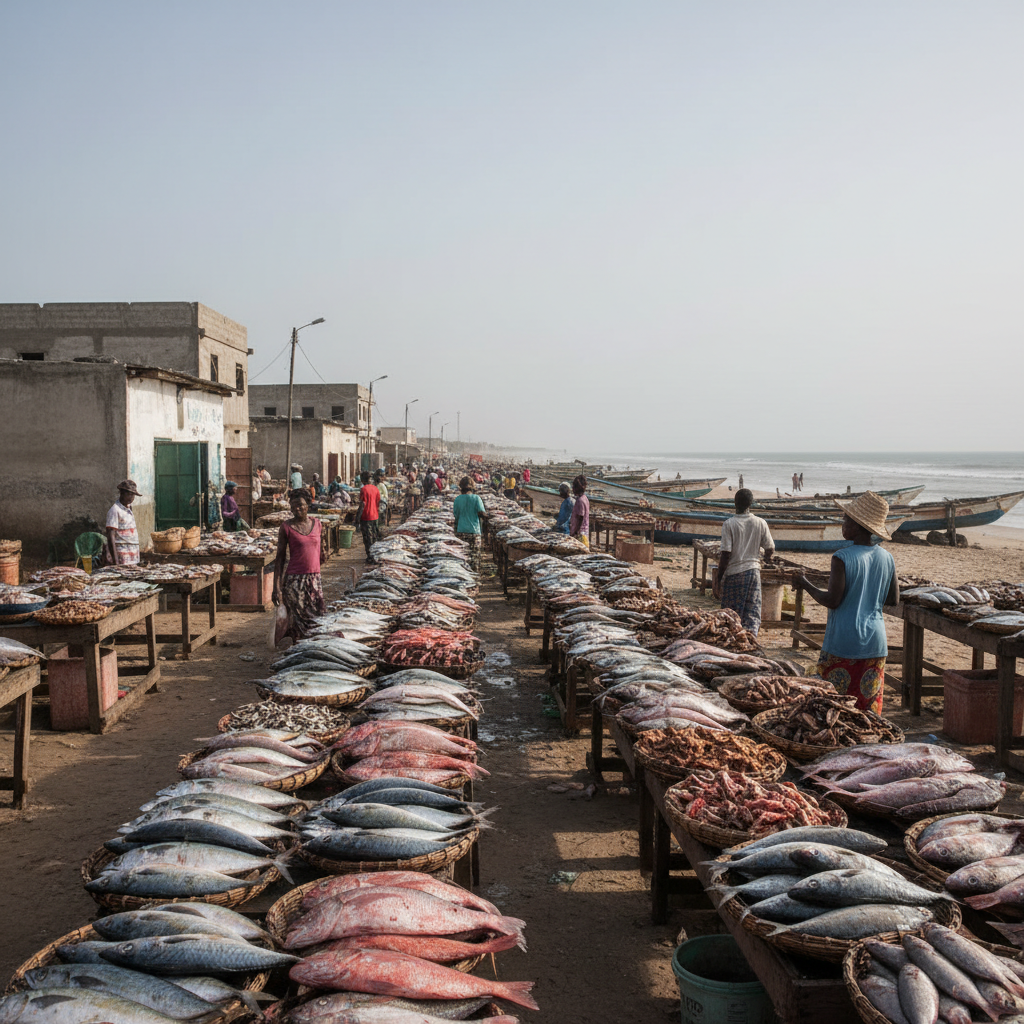
Thirty fishers from Ghana's four coastal regions have committed to supporting the Fisheries and Aquaculture Act, 2025 (Act 1146).
This commitment arose from the inaugural workshop of the Small-Scale Fisheries Academy (SSF Academy) in Winneba. The fishers pledged to educate their communities on the new law and work towards sustainable fishing practices. They also plan monthly dialogue platforms at landing beaches to address local challenges.
Ghana faces significant fish stock depletion due to years of illegal, unreported, and unregulated (IUU) fishing practices. The Fisheries Commission estimates Ghana imports approximately 80,000 tons of fish annually. This reliance on imports strains the economy and impacts local livelihoods. Restoring fish stocks is vital for ecological health and the long-term economic sustainability of Ghana's artisanal, semi-industrial, and industrial fisheries sectors.
The participants described their training as strengthening their capacity as community facilitators. They now feel equipped to help their professional groups implement co-management approaches in fisheries. A communique stated this initiative aims to mobilize fishing communities to develop local solutions. These solutions will complement government efforts to regenerate fisheries resources and protect fishers' livelihoods.
The Fisheries and Aquaculture Act, 2025, provides a legal framework for fisheries co-management. The partnership between Mundus Maris asbl and the Canoe and Fishing Gear Owners Association of Ghana (CaFGOAG) LBG seeks to translate this law into practical action. This includes strengthening co-management institutions and encouraging voluntary compliance with fisheries laws. The group welcomed collaboration from various stakeholders to support a sustainable future for Ghana's small-scale fisheries.
This initiative represents a significant step towards improving Ghana's fisheries management. Future developments will likely focus on the implementation of these local dialogue platforms. The cooperation between fishers and governing bodies could lead to more effective policy enforcement. Decision-makers will closely monitor the impact on fish stocks and import figures. This aims to bolster food security and reduce the economic burden of fish imports.