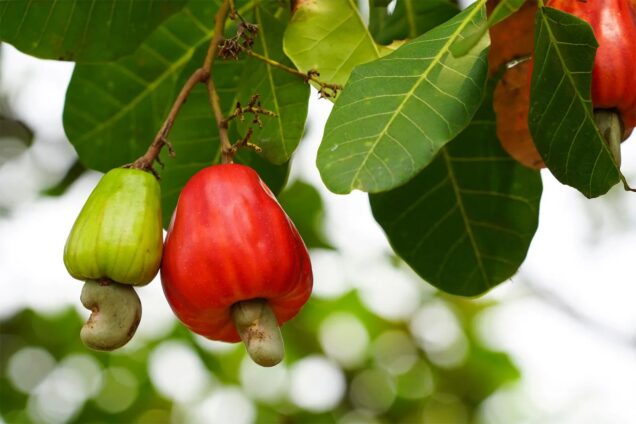
German Development Cooperation and Swiss-Ghanaian company KOA have partnered to commercialise Ghana's underutilised cashew apples. This initiative aims to create new income opportunities for farmers, women, and rural enterprises across the country. The project, launched on September 16, 2026, seeks to transform a significant waste product into valuable commercial goods.
This partnership will reduce the large volumes of cashew apples left to rot after farmers harvest the nuts. Cashew apples can make up to 90 percent of the fruit's total mass. The initiative will create new opportunities for local processing, job creation, and investment in rural areas. It directly addresses post-harvest losses, a major challenge for Ghanaian agriculture.
This development fits into Ghana's broader economic strategy to diversify agricultural exports and add value to raw materials. Ghana's cashew sector has traditionally focused on nut production, exporting raw kernels. This new approach seeks to unlock additional value from existing resources. It aligns with government efforts to boost rural incomes and create sustainable employment. The project also supports Ghana's drive towards industrialisation by promoting local processing capabilities.
Arlett Stojanovic, Head of the Private Sector and Innovation Promotion (PSInno) Programme at GIZ Ghana, highlighted the dual benefits. She stated, “This partnership is about demonstrating that development impact and commercial opportunity can reinforce each other. Using this underutilised resource is creating new opportunities for farmers and private-sector investment.” This statement underscores the project's potential for both social and economic returns.
The initiative will provide farmers with an additional income source from their cashew harvest. Women and community enterprises can take on roles in processing, quality management, and value addition. This focus on local involvement empowers communities and builds essential skills. KOA’s Community Mobile Processing Unit approach will support communities to collect and process cashew apples closer to farms. This model produces cashew apple juice, concentrate, and dried products for local and European markets.
Daniel Otu, KOA’s Director of Production and Operations, emphasised the untapped potential. He noted, “We see the cashew apple not as a waste product, but as an untapped raw material with the potential to support an entirely new layer of value creation in Ghana’s cashew industry.” He added that bringing processing closer to farmers helps communities capture more value. This strategy also builds products competitive in both local and international markets.
The partnership also aims to attract investors and businesses into this emerging segment of Ghana’s cashew value chain. It seeks to demonstrate a commercially sustainable model that the private sector can scale. This could lead to significant private investment in rural processing infrastructure. The project is implemented through GIZ’s PSInno and the Market-Oriented Value Chains for Jobs and Growth in the ECOWAS Region (MOVE-ComCashew). It receives support from develoPPP on behalf of the German Federal Ministry for Economic Cooperation and Development (BMZ).
Increasing the economic value of cashew apples could help Ghana’s cashew sector move beyond traditional kernel production. It creates additional value from resources already available in farming communities. This diversification strengthens the resilience of the agricultural sector. It also provides a blueprint for other agricultural waste products in Ghana. The success of this model could inspire similar initiatives across various value chains, boosting overall economic development.