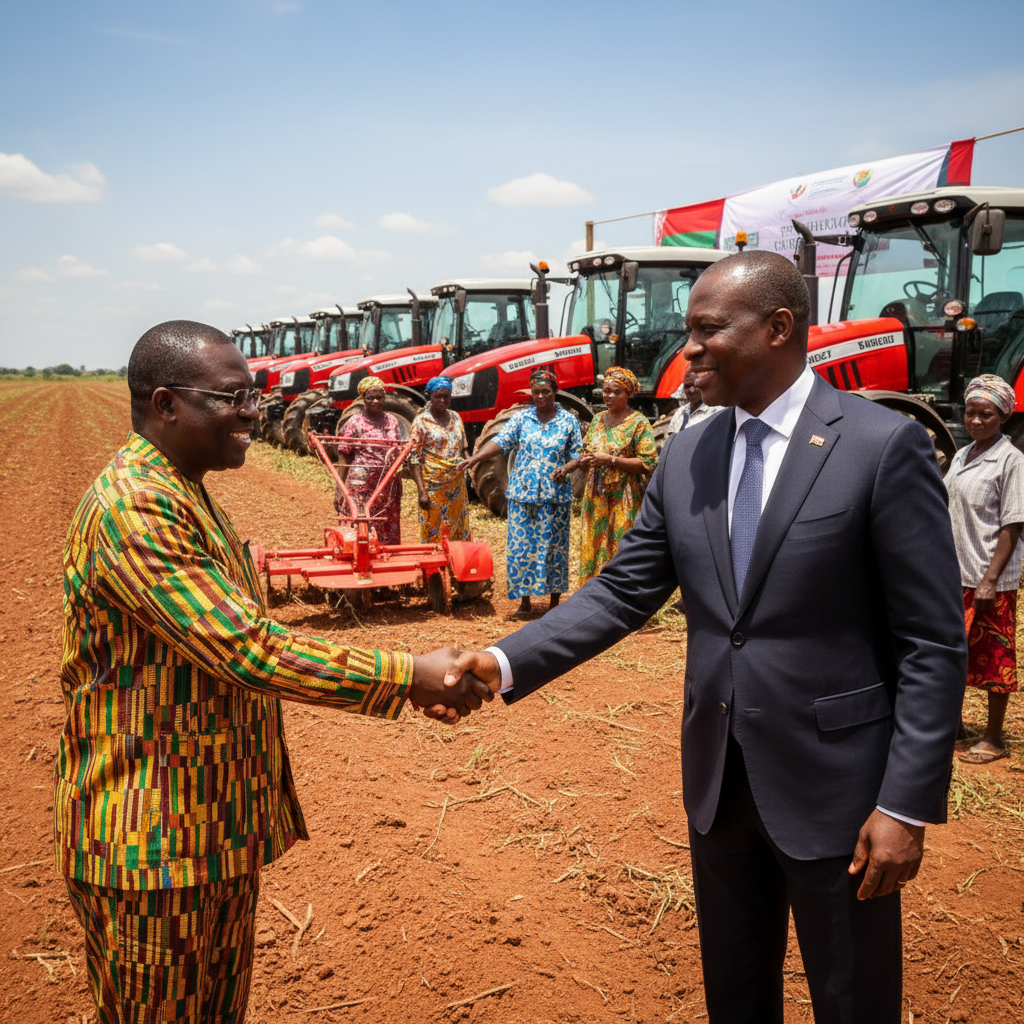
Ghana has made agriculture the central focus of its new partnership with Belarus. President John Dramani Mahama confirmed this after discussions with Belarusian President Alexander Lukashenko. This collaboration seeks to enhance Ghana's agricultural sector.
Ghana will specifically prioritise mechanisation, technology transfer, research, and investment under this new agreement. These efforts aim to modernise farming practices and improve productivity. The partnership also extends to opportunities in renewable energy, education, trade, and industry.
This initiative fits into Ghana's broader economic strategy to diversify its economy and reduce reliance on commodity exports. Improving agricultural output is crucial for food security and rural employment. Ghana's government has consistently highlighted agriculture as a vital sector for sustainable development and poverty reduction. Previous government strategies have focused on initiatives like 'Planting for Food and Jobs' to boost domestic production and reduce food imports.
President Mahama stated that “Agriculture is a central pillar of our development agenda.” He also added that “These agreements will unlock investment, stimulate innovation, and create jobs for our people.” These remarks highlight the government's expectation for significant economic benefits from the partnership.
The immediate implication is the setup of a joint commission between Ghana and Belarus to implement the agreed-upon initiatives. Market observers will watch for specific investment figures and project timelines. The success of this partnership could significantly impact Ghana's agricultural output, potentially lowering food prices and increasing farmer incomes. Decision-makers will monitor the transfer of technology and the rate of job creation in the targeted sectors.
This partnership is poised to bring advanced Belarusian agricultural technology to Ghana. This includes machinery and expertise in modern farming techniques. Increased mechanisation can help address labour shortages in agriculture and improve efficiency. Ghana's agricultural sector currently employs a significant portion of its workforce. Modernising this sector can lead to higher yields and better value addition for agricultural products. The focus on technology transfer will also build local capacity and skills.
The emphasis on investment is critical for Ghana's economic growth. Foreign direct investment (FDI) into key sectors can drive infrastructure development and create a more robust industrial base. The renewable energy sector, also mentioned in the partnership, could see new projects. These projects would help Ghana meet its energy demands sustainably. Education and trade collaboration will further strengthen bilateral ties and foster economic exchange between the two nations.
This strategic alliance underscores Ghana's push for international cooperation to achieve its national development goals. The partnership with Belarus is expected to yield tangible benefits over the coming years. It represents a concrete step towards Ghana's vision of a more industrialised and technologically advanced economy. The performance of these joint ventures will be a key indicator of the partnership's success.