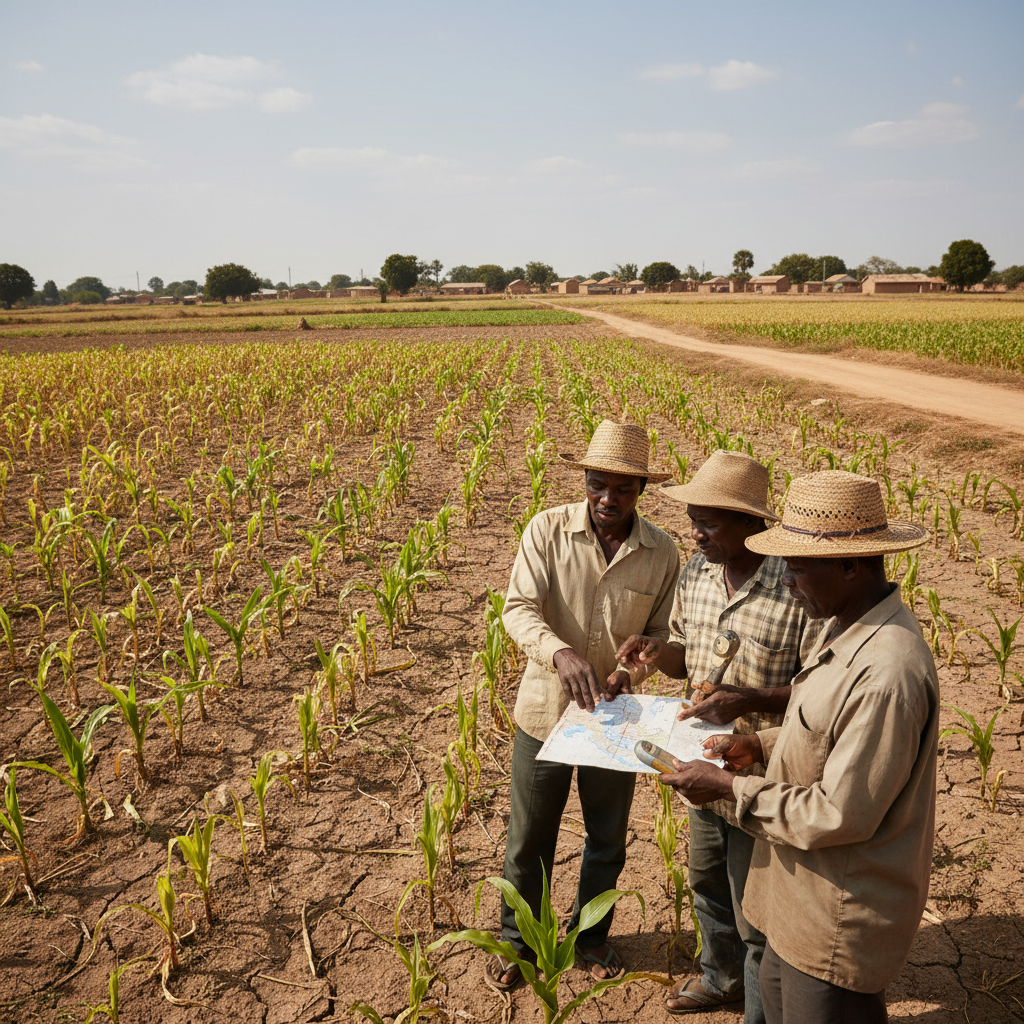
Ghana's agricultural transformation agenda is currently constrained by the weak application of existing soil data, despite the presence of advanced scientific research systems. The Council for Scientific and Industrial Research (CSIR) Soil Research Institute reports that critical insights into soil conditions are not reaching farmers or influencing national policy decisions.
This failure to use detailed soil information means farmers often apply fertilizers inefficiently, leading to higher costs and lower yields. Dr. Collins Tay, Director of the CSIR Soil Research Institute, stated that the institute's Ghana Soil Information System can provide precise data for specific farm locations. He noted this system maps soil properties, including pH levels, nutrient content, and biological activity, to offer tailored recommendations.
This situation fits into a broader pattern where Ghana struggles to translate scientific research into practical economic gains. The agricultural sector contributes significantly to the nation's GDP and employment. However, reliance on generalized farming practices, rather than data-driven methods, holds back productivity. This issue is particularly critical as Ghana aims to strengthen food security and reduce dependence on food imports.
Dr. Tay highlighted the problem during a press briefing, explaining the advanced capabilities of the Ghana Soil Information System. He emphasized that the system can guide precise agricultural decisions, yet these tools are not being fully used in national planning and farm-level practices. Dr. Tay stressed the importance of precision in reducing waste and improving yields, especially with rising agricultural input costs.
The lack of widespread soil testing results in farmers adding nutrients like nitrogen indiscriminately, even when not needed. This practice leads to inefficiency, increased costs, and potential environmental damage, according to Dr. Tay. He added that the current generalized approach to soil management ignores the specific needs of different farm plots. Two farms just a few kilometres apart can have very different soil characteristics, requiring different treatment.
Moving forward, better integration of scientific recommendations into government programs, such as fertilizer subsidies, is essential. Stronger collaboration between government institutions and research bodies like the CSIR is needed. This will ensure that agricultural decisions are based on data, not guesswork, improving food production outcomes. Ignoring soil science means continued spending on fertilizers without achieving desired results.
Effective use of soil intelligence systems offers a powerful, yet underutilised, tool for improving agricultural output and ensuring food security in Ghana. Policy makers must prioritize the integration of soil data into national agricultural strategies. This will foster more efficient resource allocation and sustainable farming practices nationwide.