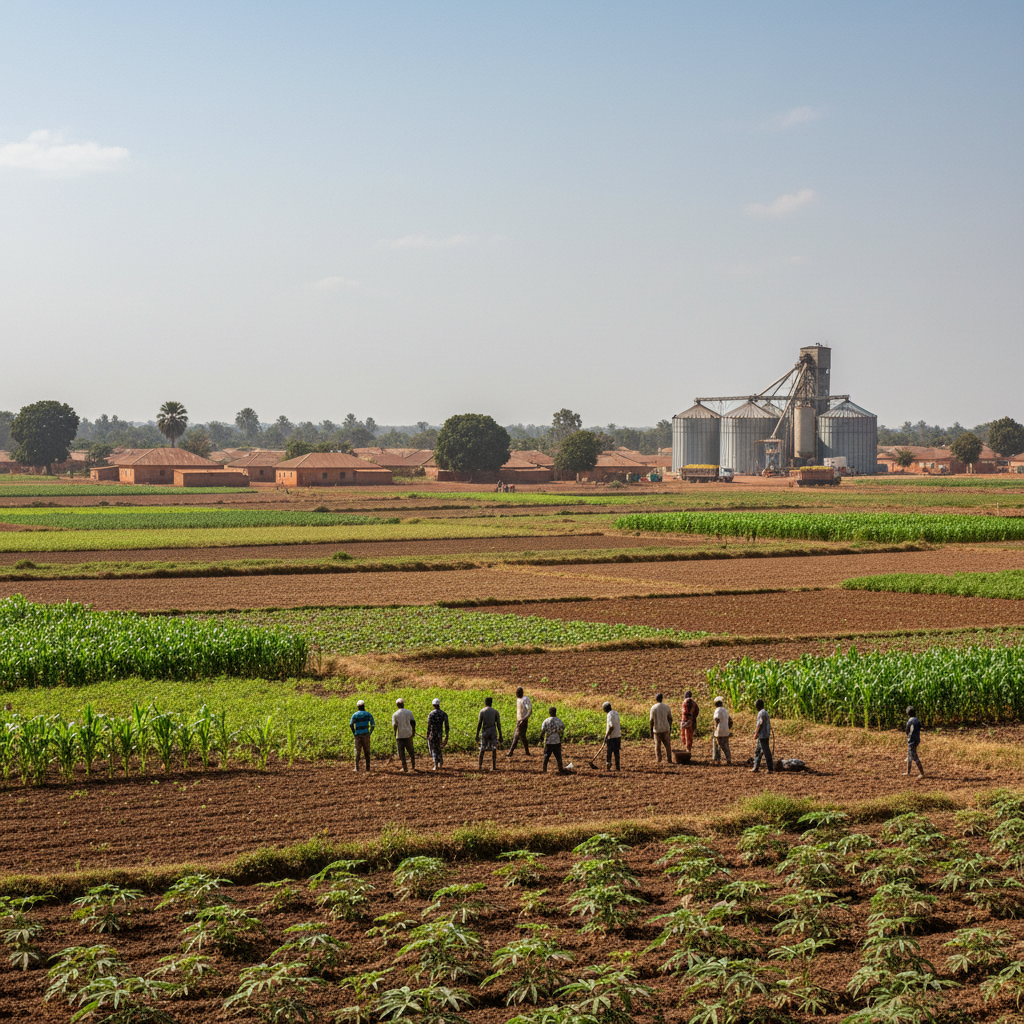
Ghana's agricultural sector expanded by 1.7 percent, according to the Ghana Statistical Service (GSS). This growth contributed to an overall economic expansion of 4.7 percent across the country in April 2026.
The agricultural sector's modest increase occurred alongside stronger performances in other key sectors. The services sector demonstrated the highest growth, expanding by 6.0 percent. The industry sector also showed robust performance, growing by 4.0 percent during the same period.
This overall economic expansion signifies a positive trend for Ghana's economy. The GSS data provides critical insights into the performance of different economic pillars. Sustained growth across these sectors is vital for job creation and improving living standards for Ghanaians. This data point follows previous reports indicating steady, albeit sometimes uneven, economic progress.
The Government Statistician confirmed these figures, highlighting the diverse contributions from various parts of the economy. These official statistics are compiled by the Ghana Statistical Service. They provide a reliable overview of national economic health.
Policymakers will closely monitor these sector-specific growth rates. The relatively slower growth in agriculture warrants attention, given its importance for food security and rural livelihoods. Further analysis will determine if this trend is sustainable or if targeted interventions are necessary to boost agricultural output. Investors and businesses will also assess these figures to guide their decisions for the coming quarters.
The agricultural sector's 1.7 percent growth rate is an important indicator. It suggests a slow but positive movement in a sector crucial for a large portion of Ghana's population. Comparatively, the 4.0 percent growth in industry underscores ongoing industrialization efforts. The 6.0 percent growth in services highlights the increasing importance of this sector to Ghana's modern economy. This balanced growth across sectors helps cushion the economy against shocks in any single area. Monitoring these trends allows for informed economic planning. It also helps in forecasting future employment opportunities.
Ghana's Debt Management Unit recently projected GHS 54 billion in debt servicing for 2027. This context underscores the importance of strong economic growth to generate revenue for such obligations. The current economic expansion provides a foundation for managing the national debt effectively. A growing economy means more tax revenue. More revenue means greater capacity to meet financial commitments. This interconnectedness is crucial for Ghana's long-term fiscal stability. Continuous macroeconomic stability is essential to maintain investor confidence. It also ensures the availability of funds for critical public services and infrastructure development.