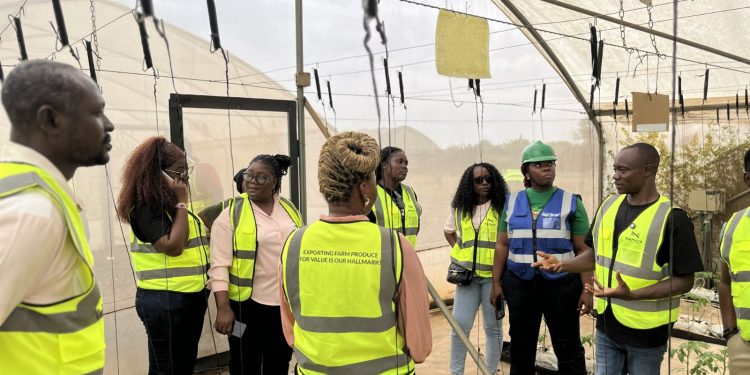
Ghana is emerging as a potential exporter of agricultural knowledge and expertise, evidenced by growing international interest in its successful farming models. The Dawhenya greenhouse facility, managed by Maphlix Trust Ghana Limited, has attracted visits from global agribusiness executives and government officials.
This facility, operational since 2015, has transformed into a center for advanced agricultural production and skills development. It now hosts delegations keen to learn Ghana’s modern farming techniques. These visitors include officials from Liberia’s Ministry of Agriculture and agribusiness leaders from Indiana, United States.
This development signifies a shift in Ghana’s agricultural sector, expanding beyond traditional produce exports. It aligns with broader economic trends where commercial farms become centers for innovation and technology transfer. The focus moves towards generating value through knowledge exchange rather than solely on physical output.
Dr. Felix Mawuli Kamassah, CEO of Maphlix Trust Ghana Limited, emphasized the importance of this knowledge sharing. He stated, “We have the expertise here and we are happy for other countries to visit and learn from what we are doing.” He believes African nations can strengthen their agricultural production by collaborating and sharing successful practices.
The transformation of the Dawhenya site is particularly noteworthy as it repurposes underutilized public agricultural infrastructure. What was once a dormant Ministry of Food and Agriculture facility now serves as a platform for commercial farming and youth training. This showcases a model for leveraging existing assets for economic growth and employment.
These international visits often yield benefits beyond immediate commercial transactions. They can lead to technology transfer agreements, training programs, and investment partnerships. Such engagements strengthen regional value chains and contribute to economic diplomacy. Future developments could include formal agreements for technical cooperation and capacity building, particularly benefiting countries like Liberia that import significant volumes of vegetables.
This trend supports the objectives of the African Continental Free Trade Area (AfCFTA). The AfCFTA aims to boost intra-African trade and economic integration. Exporting agricultural expertise contributes to a more resilient and self-sufficient continental food system. Decision-makers should consider how to replicate this model across Ghana to maximize its economic impact. Observing how these knowledge transfer initiatives translate into tangible economic benefits will be crucial.