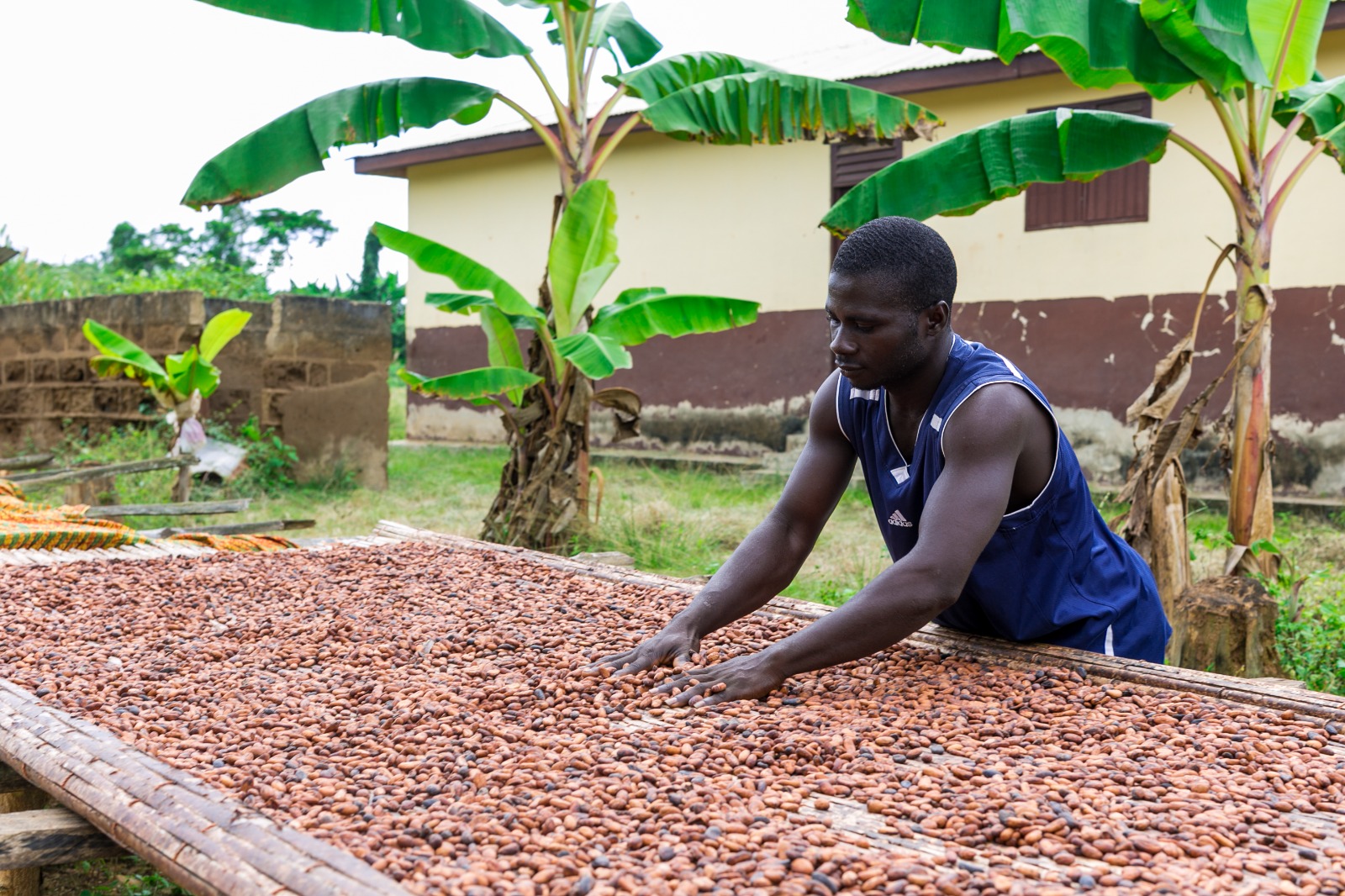
Fairtrade Africa has established new Living Income Reference Prices for cocoa in Ghana and Côte d'Ivoire. These prices provide a transparent, evidence-based benchmark for buyers to ensure cocoa farmers earn a living income.
This development comes as world cocoa prices have fallen sharply since late 2024. However, production costs have not decreased, intensifying financial pressure on smallholder farmers. Many farmers receive prices well below what is needed for a living income, despite cocoa being their primary livelihood.
The new reference prices are crucial for Ghana's economy, where cocoa is a major export commodity. Ghana and Côte d'Ivoire together produce about 60 percent of the world's cocoa. This initiative aims to stabilize farmer incomes, which is vital for rural economic stability and national export earnings. Previous efforts, like the Living Income Differential (LID), have sought to address similar issues, highlighting the ongoing challenge of farmer remuneration.
Paul Colditz, Commercial Director at Fairtrade Africa, emphasized the importance of this new benchmark. He stated, “For too long, market volatility has made it harder for farmers to plan for a stable, living income. The Fairtrade Living Income Reference Price gives the industry a clear benchmark for closing that gap.” This statement underscores the organization's commitment to farmer welfare and supply chain resilience.
The introduction of these reference prices will likely influence future cocoa purchasing agreements and pricing strategies. Decision-makers in the cocoa industry, including buyers and policymakers, will need to respond to these new benchmarks. The market will closely watch how these prices translate into actual farm-gate payments and their impact on farmer livelihoods. This move could also encourage other certification bodies to adopt similar transparent pricing mechanisms.
Fairtrade Africa will convene producer organizations, cocoa buyers, policymakers, and partners for its Change Day 2026 in Accra on Thursday, August 27. This event, held alongside its Annual General Assembly, will discuss the implications of these new prices. The gathering aims to bridge the gap between pricing decisions and the realities faced by cocoa producers. It will also launch a broader business-to-business campaign targeting cocoa buyers, processors, chocolate brands, and retailers. This campaign will run through September, advocating for Fairtrade sourcing as a strategy for supply chain resilience.
Fairtrade Africa is an independent, non-profit organization representing nearly 1.5 million farmers and workers. These individuals are part of over 700 Fairtrade-certified producer organizations across Africa. The organization operates through four regional networks, including West, Southern, Eastern, and Central Africa, as well as the Middle East and North Africa. Its model includes the Fairtrade Minimum Price, which protects farmers from market downturns. It also features the Fairtrade Premium, additional funds invested by producer organizations in community projects and business growth. The new Living Income Reference Price adds another layer of support, providing a concrete figure for buyers to target. This comprehensive approach aims to create a more equitable and sustainable cocoa sector. Field visits to cocoa-growing communities will precede the main event, offering journalists direct access to farmers and cooperatives.