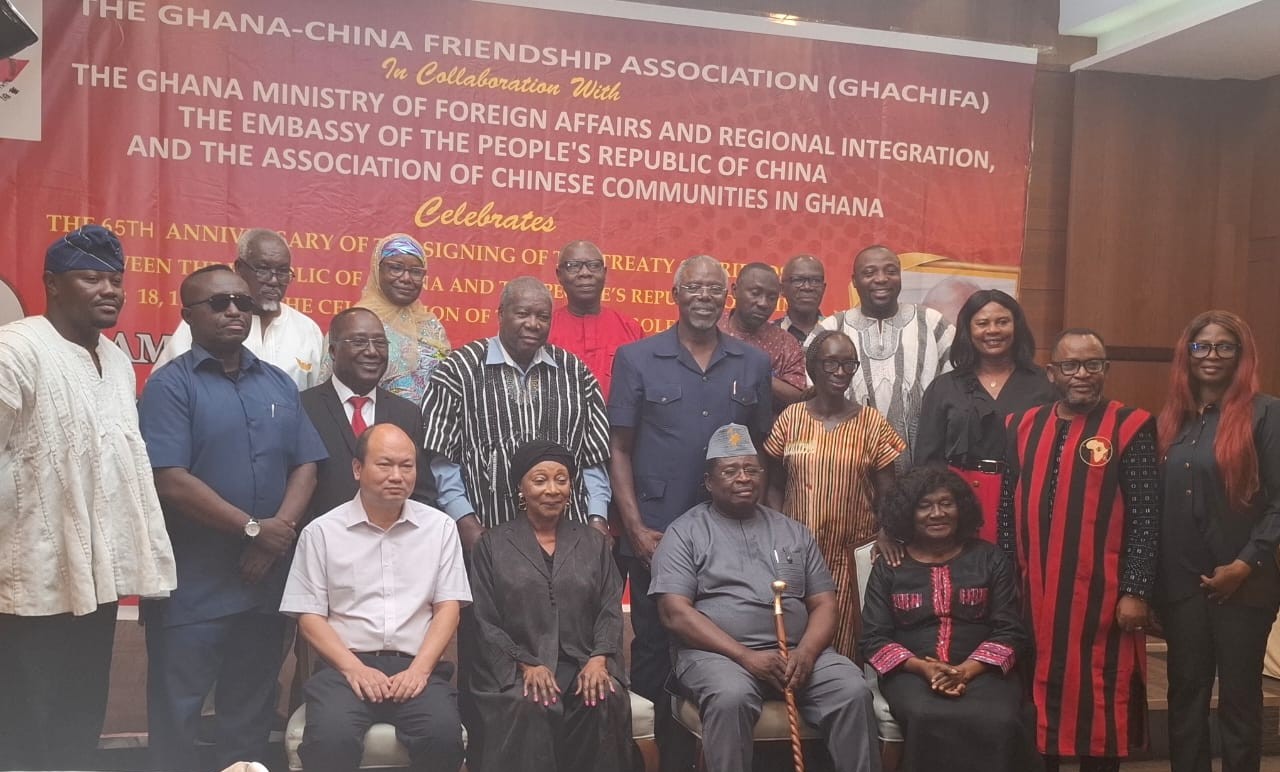
Experts have urged Ghana to draw lessons from China’s agricultural transformation by sustaining investment and ensuring policy continuity. This approach aims to boost Ghana's agricultural sector and drive economic development.
The experts emphasized focusing on the core principles behind China's agricultural success, not just replicating technologies. They highlighted the importance of a complete agricultural system, including infrastructure, research, and market access. This integrated strategy is seen as vital for Ghana's long-term food security and economic growth.
This call comes as Ghana seeks to strengthen its economic base and reduce reliance on imports. The country's agricultural sector contributes significantly to GDP and employment. Learning from China's experience could help Ghana overcome challenges like low productivity and post-harvest losses. Prior efforts to transform agriculture have often lacked sustained implementation across different administrations.
Mr. Wu Jianrong, an agriculture engineer, stated that China achieved its transformation through sustained development of a complete agricultural system. He noted China's investments in irrigation, roads, electricity, and improved seeds over many years. Mr. Wu stressed that modern agriculture involves building an entire value chain, not just producing crops.
Dr. Abu Sakara, a Development Agronomist, identified persistence and continuity of investment as Ghana's most important lesson from China. He noted Ghana's history of introducing development plans without sustaining their implementation. Dr. Sakara called for consecutive long-term development plans with clear targets that remain relevant across successive governments.
Mr. Wu specifically recommended prioritizing irrigation to reduce farmers’ dependence on rainfall. This would enable continuous production throughout the year. He also advocated for expanding agricultural mechanization through machinery service centres. These centres would allow farmers to pay for services like planting and harvesting without buying expensive equipment.
Investment in agro-processing, storage, cold-chain facilities, and packaging is critical, according to Mr. Wu. Such investments would reduce post-harvest losses and create jobs, especially for young people. He also suggested stronger technology transfer and skills development through more China-Ghana agricultural demonstration farms and technical training centres.
Dr. Sakara further pointed out high transaction costs as a major impediment to agricultural development. These costs include finance, transportation, and storage expenses. High interest rates make it difficult for Ghanaian farmers to compete with producers in countries with cheaper financing. He urged policies to reduce these costs rather than just providing subsidies.
Dr. Ishmael Nii Dodoo, Chief Partnership Officer at the 24-Hour Economy Secretariat, confirmed agriculture is central to the Government’s 24-hour economy programme. He said it would serve as a basis for industrialisation. The programme focuses on addressing structural constraints like irrigation, energy, transportation, and financing.
Dr. Dodoo mentioned efforts to develop agricultural corridors based on soil characteristics and production potential. Over 600,000 hectares have been identified for commercial agricultural production. The government is also working to address energy costs, a major constraint for Ghanaian industries and agricultural processing.
The experts stressed the need to integrate agriculture with finance, energy, transport, science, and technology. This integration aims to reduce production costs and support value addition. While Ghana does not need to copy China’s model wholesale, adapting its principles is essential. Sustained policy commitment, integrated planning, infrastructure development, technology adoption, and profitable agricultural enterprises are key to making agriculture a stronger economic driver.