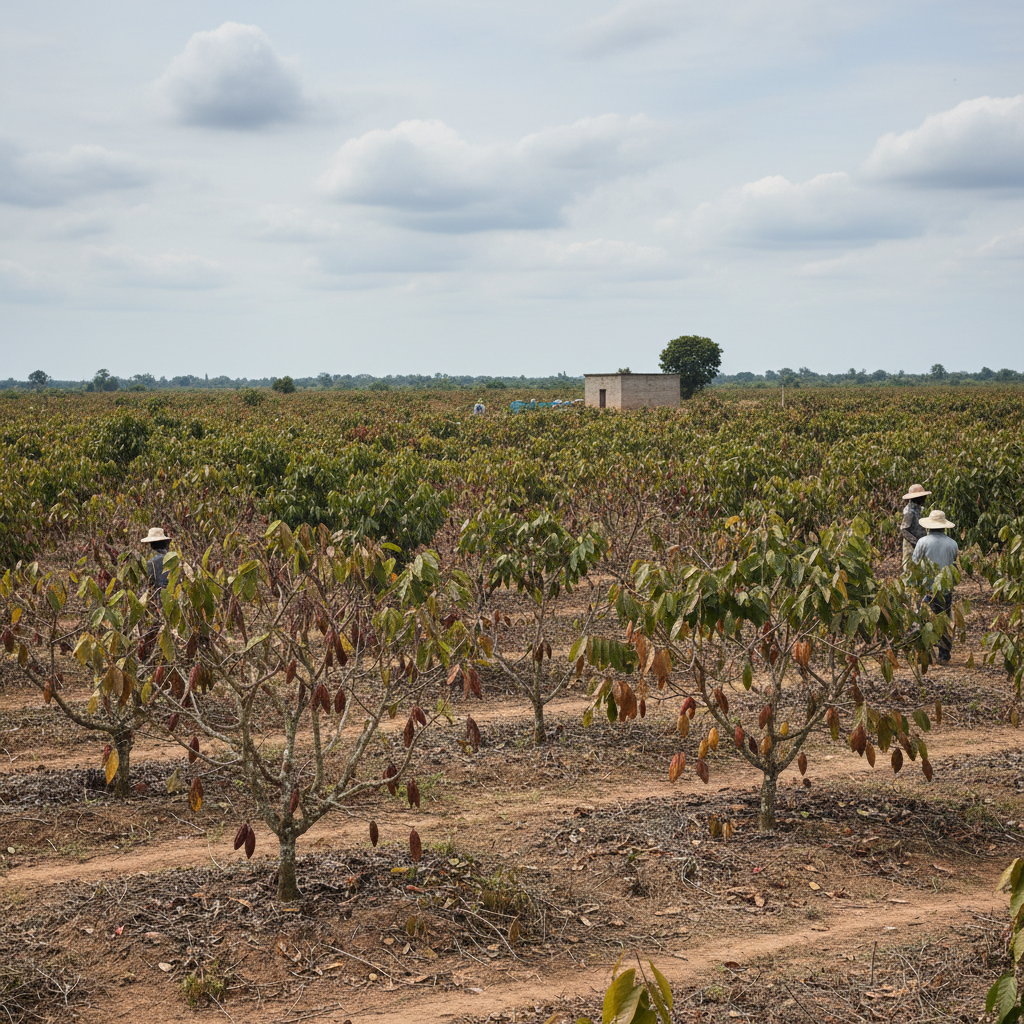
Ghana's cocoa production will reach 670,000 tonnes in the 2026/27 crop season. This forecast comes from Fitch Solutions, which predicts that El Niño’s adverse weather will significantly reduce West African cocoa output.
The impact of El Niño will also heavily affect Côte d’Ivoire, where production is expected to decline by 17.5% year-on-year to 1.7 million tonnes. These reductions stem from El Niño, a natural climate pattern causing extreme conditions like droughts and heatwaves. Smallholder farmers in both nations, lacking resources for irrigation and financing, are particularly vulnerable to these weather shocks.
This expected dip in cocoa production comes at a critical time for Ghana’s agricultural sector, a cornerstone of its economy. Cocoa exports are a major source of foreign exchange earnings for the country. Fluctuations in cocoa prices and output directly impact Ghana’s trade balance and government revenues. The reliance on rain-fed agriculture makes the sector highly susceptible to climate change effects and global weather patterns.
Fitch Solutions underlined the specific vulnerabilities. “We view the dominance of smallholder farmers as another factor increasing supply vulnerability, as smallholders have limited capacity to absorb weather and input shocks,” the UK-based firm stated. In their analysis, limited access to irrigation, financing, and yield-improving technologies exposes production to erratic rainfall. Reduced fertiliser effectiveness in drier conditions may also discourage farmers from applying key inputs, leading to lower yields.
Looking ahead, decision-makers must monitor cocoa production closely. Potential shortfalls could affect global cocoa prices and the livelihoods of millions of farmers. Policymakers may need to consider strategies to support farmers in adapting to climate change, such as promoting drought-resistant varieties or improving access to micro-financing and insurance. The market will react to these supply pressures, with potential implications for international cocoa prices and related industries.
Ageing tree stocks in both Ghana and Côte d’Ivoire also amplify the risks, according to Fitch Solutions. Older trees yield less and are more prone to diseases. Drier conditions further weaken tree health, increasing pest and disease pressures. This raises the risk of even sharper output losses than initially projected. The main-crop fertiliser application window, typically in September, means the current pressures could affect 2026/27 output sooner than anticipated.
The mid-crop harvest, however, might be less exposed. Fertiliser applications for the late-2026 mid-crop would have occurred around April 2026. This timing offers some relief but does not negate the overall negative outlook for the season. The long-term implications necessitate urgent attention to agricultural resilience and diversification programs.