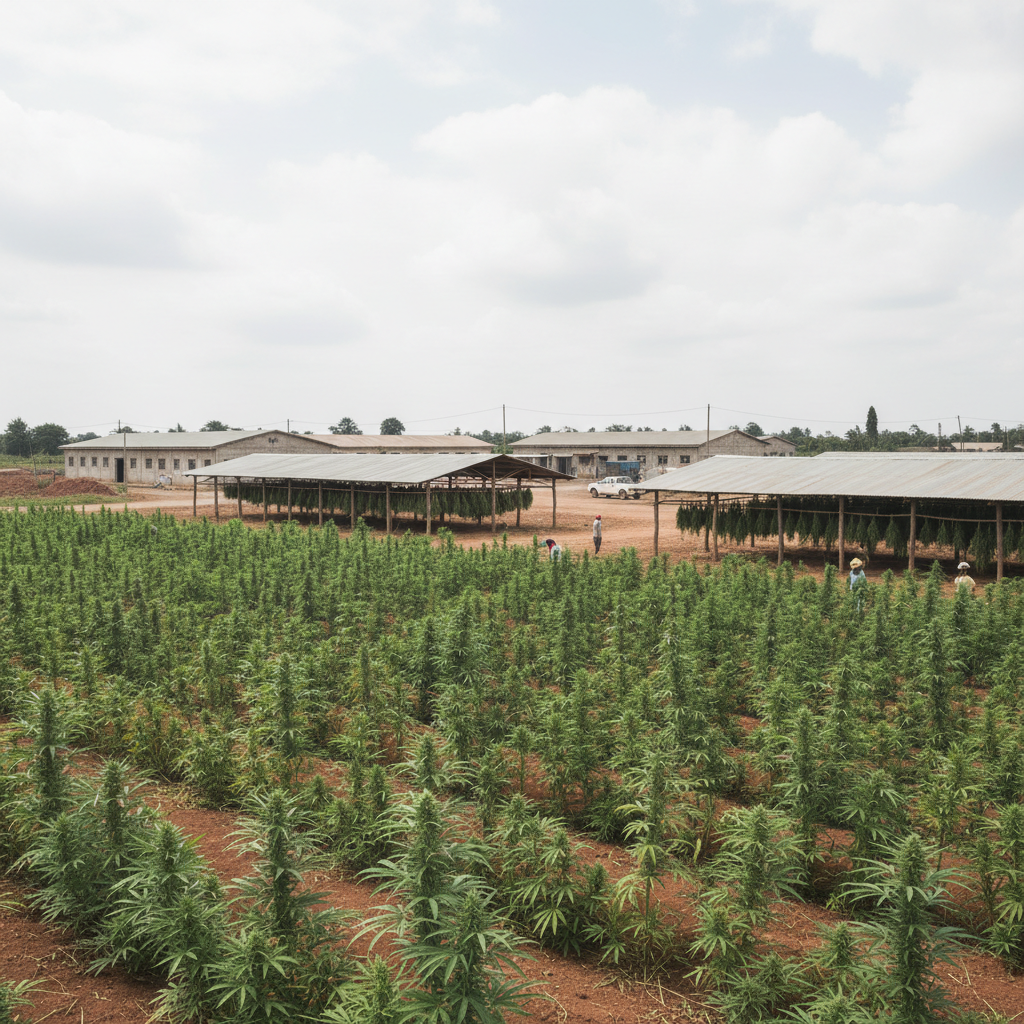
Eight companies have applied for licenses to cultivate industrial cannabis in Ghana. The Minister of the Interior, Alhaji Muntaka Mohammed Mubarak, confirmed these applications. This development follows recent legislative changes permitting controlled cannabis cultivation.
Under Ghana’s legal framework, only cannabis containing 0.3 percent or less of tetrahydrocannabinol (THC) may be grown. This low-THC cannabis is strictly for industrial and medicinal uses. Recreational use of cannabis remains prohibited in Ghana, ensuring a clear distinction for commercial operators.
This initiative fits into Ghana's broader economic strategy of diversifying agricultural exports and creating new value chains. The Narcotics Control Commission (Amendment) Act, 2023 (Act 1100), and the Narcotics Control Commission Regulations, 2023 (L.I. 2475) guide this policy. These laws establish the legal framework for licensing and regulating industrial cannabis cultivation. The government aims to tap into the global market for industrial hemp and medicinal cannabis products.
Alhaji Muntaka Mohammed Mubarak, speaking before Parliament’s Assurances Committee, emphasized the controlled nature of this legalisation. He stated that it does not permit indiscriminate cultivation. The Ministry, with the Narcotics Control Commission, conducted 2,170 sensitisation activities and radio programmes in 2025. These campaigns reached an estimated 500,000 people nationwide. The goal was to educate communities on the guidelines and dangers of narcotic drug cultivation.
The government plans to recruit narcotics intelligence experts across all 261 metropolitan, municipal, and district assemblies (MMDAs). Currently, Narcotics Control Commission offices operate in 66 MMDAs. The government plans to expand this coverage nationwide within the next five to seven years. This expansion will strengthen regulatory oversight and enforcement capabilities. Such measures are crucial for maintaining public safety and preventing illegal activities.
The move to legalise specific cannabis cultivation could attract significant foreign and local investment. This investment would create jobs and generate new GHS revenues for the state. Decision-makers and market participants will closely watch the successful implementation of these licensing agreements. Ghana’s ability to establish a robust and regulated industrial cannabis sector could enhance its economic resilience. This includes monitoring the first harvests and processing facilities.