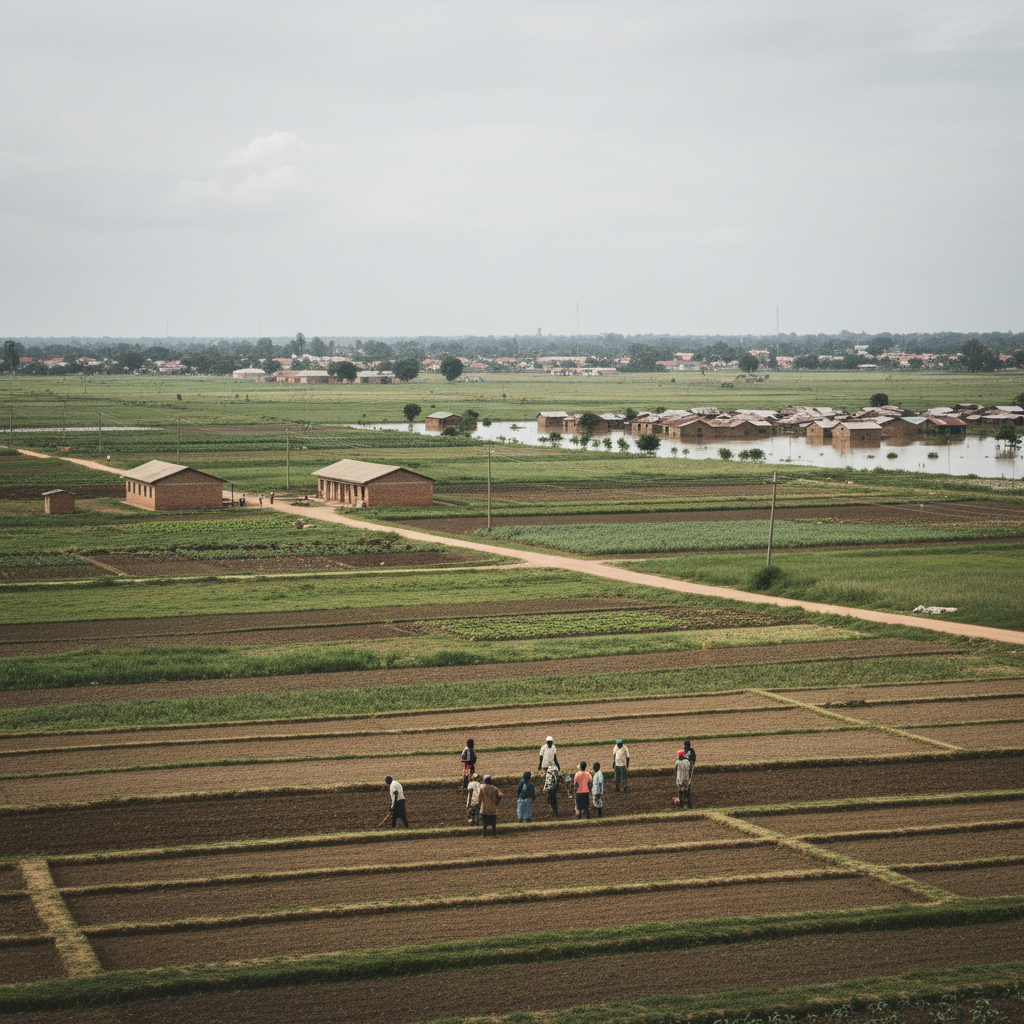
Scientists at the Council for Scientific and Industrial Research (CSIR) are urging Ghanaian farmers to adopt climate-smart farming practices. This initiative aims to minimise crop losses caused by increasing flood events across the country. The recommendation follows significant agricultural damage, including the destruction of farms and standing crops in the Volta Region.
The Ghana Meteorological Agency reported that a slow-moving storm system caused the June 29 floods. This system moved from Togo into Ghana, bringing prolonged rainfall, especially along the coast. Accra alone recorded 169 millimetres of rainfall on June 29, with a cumulative 593 millimetres for the entire month of June.
This advice is crucial for Ghana's economy, where agriculture contributes significantly to the Gross Domestic Product (GDP) and employs a large portion of the workforce. Frequent flooding threatens food security and the livelihoods of many farming communities. Adopting resilient farming methods can safeguard agricultural output and stabilise rural incomes.
Dr. Kirpal Agyemang Ofosu, a Research Scientist (Rice Breeder) at the CSIR-Crops Research Institute (CSIR-CRI), highlighted the importance of specific rice varieties. He noted that while Ghana lacks flood-tolerant rice varieties, some local options are better suited to flood-prone conditions. Dr. Ofosu recommended CRI-AgraRice, CRI-Korea Mo, and Legon Rice 1 for cultivation in areas susceptible to flooding.
Dr. Ofosu also advised farmers to create and regularly clean drainage canals around their fields. This practice helps direct water flow during heavy rainfall. He stressed the need for proper field levelling to improve water movement and urged farmers to monitor weather forecasts before planting. Farmers should avoid cultivating in low-lying areas without adequate drainage. He also encouraged the use of smartphone weather forecasts for informed farming decisions.
Dr. Stephen Yeboah, a Senior Research Scientist at the CSIR-CRI, emphasised that proper land preparation is the primary defence against flood damage. He recommended ploughing across slopes instead of along them. This technique reduces runoff and prevents soil erosion, preserving vital nutrients and protecting crops from waterlogging.
Dr. Yeboah explained that ploughing along slopes facilitates runoff, which depletes soil nutrients and can wash away crops. He also noted that some existing crop varieties possess deep, strong root systems. These varieties can better withstand waterlogging, even if they were not specifically developed for flood tolerance.
The scientists underscored the critical role of timely climate information and early warning systems. Dr. Yeboah stated that prior information about flooding could allow farmers to plant early and harvest before floods. Alternatively, they could adjust planting dates to significantly reduce losses. This proactive approach is vital for mitigating the economic impact of extreme weather.
The CSIR scientists called on the government to invest in drainage infrastructure in major farming areas. They also urged improved access to real-time weather information for farmers. Strengthening agricultural extension services is essential to support the widespread adoption of climate-smart farming practices across Ghana.