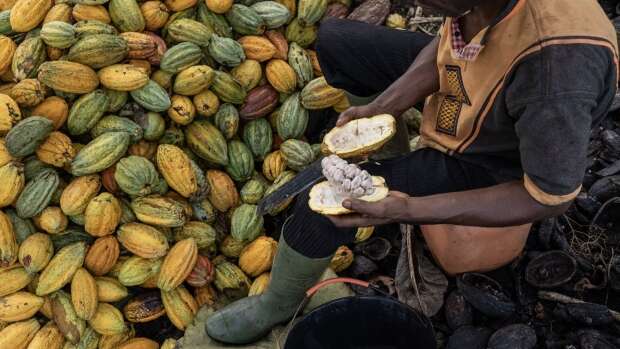
Ghana Cocoa Board (COCOBOD) is targeting a significant increase in local cocoa processing, aiming to process at least 50% of the country’s total cocoa output. This ambitious goal is set for the 2026/27 crop season. The move seeks to capture a larger share of the global chocolate value chain and reduce Ghana's dependence on exporting raw cocoa beans.
This policy direction, confirmed by COCOBOD Chief Executive Officer Dr. Randy Abbey, signals a major shift. Ghana, the world's second-largest cocoa producer, is moving from a primary commodity export model. The new focus is on value addition, creating industrial jobs, and strengthening local participation in downstream cocoa processing.
The current local processing rate for Ghana's cocoa beans ranges between 30% and 40%. The government's target of 50% represents a substantial industrial policy milestone. This shift is crucial for Ghana's economic development and its position in the global cocoa market.
Dr. Abbey emphasized that Africa's cocoa industry cannot solely rely on producing more beans. He stated, "We cannot continue exporting raw materials while others create the jobs, industries and wealth from our cocoa." This highlights the long-standing issue of African countries earning limited value from their cocoa production.
Cabinet has already directed that, starting from the 2026/27 crop season, a minimum of 50% of Ghana’s cocoa beans must be processed locally. As part of this strategy, the state-owned Cocoa Processing Company is expected to undergo revival. This will enhance its capacity to contribute to the increased processing targets.
The Ministry of Finance has also linked this processing target to a broader reform of COCOBOD’s financing model. Under the new framework, COCOBOD will use domestic cocoa bonds to finance cocoa purchases. These bonds will be repaid with cocoa proceeds within each crop year.
This new financing approach creates room to sell any volume of beans to local processors. It also promotes value addition and job creation within Ghana. Previously, Ghana's financing model was heavily tied to forward sales of raw beans, which limited its ability to optimize domestic processing capacity.
Achieving the 50% local processing target offers several economic benefits. It can increase export earnings, create manufacturing jobs, and deepen technical skills within the country. It also strengthens domestic enterprise participation and reduces Ghana’s vulnerability to raw bean market cycles.
However, delivering this target will not be easy. Processing cocoa at scale requires reliable electricity, which is essential for efficient grinding and processing facilities. Interruptions in power supply increase production costs and affect product quality.
Affordable long-term financing is another critical factor. Local processors need access to working capital to buy beans and maintain inventories. Without competitive financing, the value-addition agenda could be dominated by larger multinational processors, rather than fostering a broad local industrial base.
Modern plants, skilled labor, consistent bean supply, and access to export markets are also vital. Policy predictability is crucial to attract and sustain investment in the processing sector. These conditions are necessary to compete with processors in other global hubs.
Dr. Abbey’s call for stronger collaboration among African cocoa-producing countries is significant. A coordinated continental approach could improve bargaining power and support fairer pricing. It would also help harmonize standards and strengthen traceability across the region.
Such cooperation would attract investment into processing infrastructure across producing countries. It would also reduce the risk of producer countries competing against each other, a situation that often benefits international buyers more than local stakeholders. For Ghana, this processing agenda is also linked to diversifying its exports beyond raw materials.