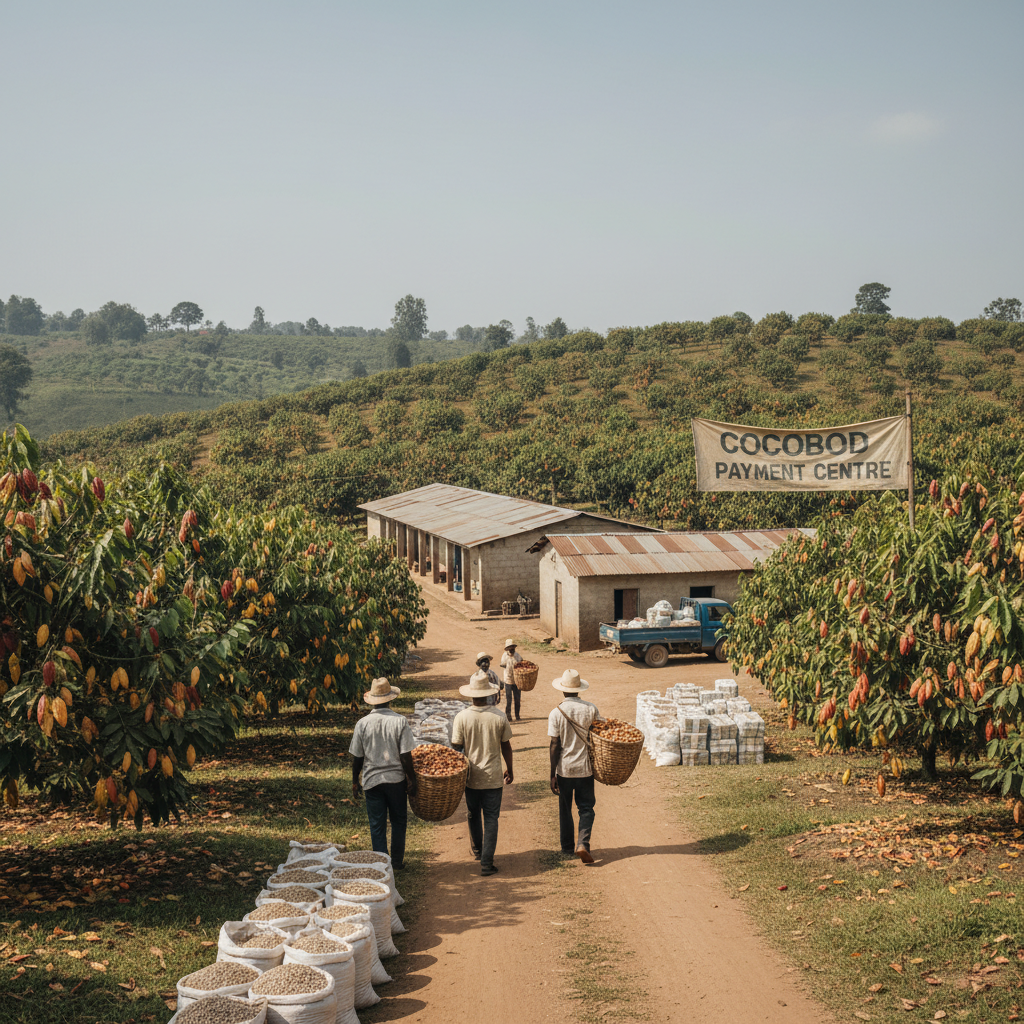
Ghana Cocoa Board (COCOBOD) has released GHS 2.6 billion to Licensed Buying Companies (LBCs). These funds will facilitate payments to cocoa farmers nationwide. More than half of this amount will clear outstanding debts owed to farmers who supplied cocoa on credit.
Specifically, GHS 1.4 billion from this latest disbursement will settle remaining balances owed by LBCs. This targets affected farmers in cocoa-growing regions across the country. This critical release aims to address long-standing payment issues within the cocoa sector.
This latest release increases COCOBOD's total payments to LBCs since the 2025/26 crop season began. The cumulative amount for farmer payments now stands at GHS 34.52 billion. Ensuring timely payments is crucial for maintaining farmer livelihoods and sector stability. Ghana’s cocoa industry is a vital foreign exchange earner, facing challenges from global price volatility and climate change. Reliable farmer payments encourage continuous production, which supports Ghana's economic stability.
COCOBOD confirmed it is working closely with LBCs to ensure all outstanding payments are made promptly. The regulator has also implemented monitoring mechanisms. These measures aim to verify that the funds reach the intended beneficiaries. A statement from the cocoa regulator highlighted its commitment. It assures farmers that no legitimate cocoa sale will go unpaid.
This disbursement demonstrates the government's commitment to protecting cocoa farmers' welfare. It also aims to maintain confidence in Ghana’s cocoa marketing system. Prompt payment to farmers is essential for preserving the integrity of the cocoa sector. The Board reaffirmed its commitment to safeguarding farmers' interests. It will ensure they receive the full value for cocoa sold through the approved purchasing system. Farmers with unpaid balances should contact their respective LBCs.
The cocoa industry directly supports over 800,000 farm families. It contributes significantly to Ghana's Gross Domestic Product (GDP). Delays in payments can impact farmers' ability to invest in their farms. Such delays also affect their household incomes. Ensuring consistent cash flow to farmers helps sustain agricultural output. It also supports rural economies where cocoa farming is prevalent. This financial intervention from COCOBOD provides a necessary boost.
The stable supply of cocoa beans is critical for Ghana's export revenue. Ghana is one of the world's leading cocoa producers. Maintaining farmer morale and financial security helps prevent illegal mining. It also reduces farm abandonment. COCOBOD plans to continue collaborating with industry stakeholders. This collaboration will ensure all outstanding obligations are fully settled. This concerted effort fortifies the cocoa value chain. It also promotes the long-term sustainability of Ghana's cocoa industry.