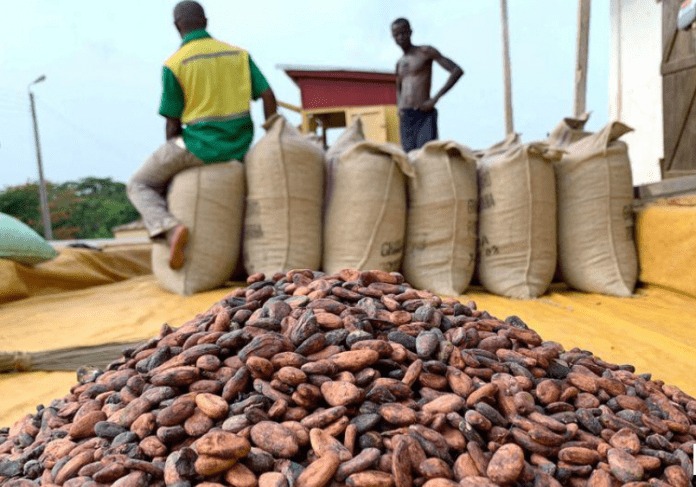
The Ghana Cocoa Board (COCOBOD) missed its self-imposed end-of-June deadline, failing to clear GHS 6 billion owed to cocoa farmers and Licensed Buying Companies (LBCs). An estimated GHS 3.4 billion remains outstanding. This figure represents 57% of the acknowledged debt.
The missed deadline follows an assurance from Jerome Sam, COCOBOD's Head of Public Affairs. He stated that only an “insignificant amount” would remain by the deadline. COCOBOD had initially acknowledged arrears exceeding GHS 6 billion.
This situation impacts Ghana's vital cocoa sector, which is central to the country's economy. Cocoa exports are a major source of foreign exchange and directly support millions of livelihoods. Delays in payment create financial strain for both farmers and LBCs. This can disrupt national cocoa production cycles.
COCOBOD released GHS 2.6 billion, representing 43% of its outstanding obligations. This amount was for two main purposes. GHS 1.4 billion was allocated to pay cocoa farmers for past crop seasons. GHS 1.2 billion was to reimburse LBCs that pre-financed cocoa purchases.
Jerome Sam, COCOBOD's Head of Public Affairs, explicitly confirmed the June deadline for near-complete settlement. He stated: “Before the end of this month, if all farmers or all LBCs who are owed are not paid, I’m sure it will be left with an insignificant amount to be owed.” He re-emphasized this commitment when pressed on the June deadline.
The continued delay carries several implications for Ghana's cocoa industry. Licensed Buying Companies face increased financing costs as they rely on borrowed funds to purchase cocoa. They await reimbursement from COCOBOD. This liquidity constraint could hinder their ability to purchase cocoa in upcoming seasons. For cocoa farmers, delayed payments directly affect their household incomes. It also limits their capacity to finance crucial farm maintenance and necessary inputs for the next production cycle. The financial stability of the entire cocoa value chain is at risk. Decision-makers will need to address this outstanding debt to ensure the sustainable progression of cocoa production. Markets will monitor COCOBOD's next steps and commitment to its payment obligations. Ghana's economic stability heavily relies on its cocoa sector's performance and the timely payment to its producers.