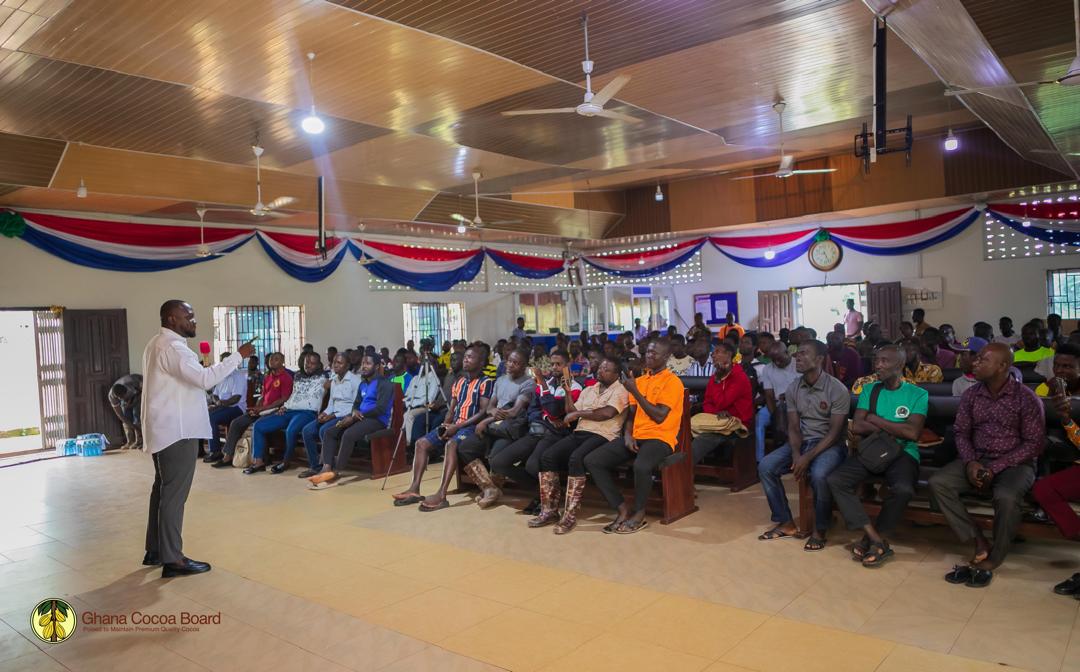
The Ghana Cocoa Board (COCOBOD) has started a nationwide sensitisation campaign for cocoa farmers. This initiative promotes the reintroduced Free Fertilizer and Agro-Inputs Distribution Programme. The programme falls under the Cocoa Diseases and Pest Control (CODAPEC/HITECH) Programme. These efforts are part of broader strategic reforms to revitalise Ghana's cocoa industry.
This campaign also aims to improve farmer livelihoods and ensure long-term cocoa production sustainability. The Public Affairs Department and the Cocoa Pest and Disease Control (CODAPEC) Unit are leading the exercise. It has covered districts in the Western South and Ashanti Regions, including Aiyinase, Huni Valley, Prestea, Samraboi, Tepa, Mankranso, and Juaso.
The cocoa sector is a cornerstone of Ghana's economy, contributing significantly to export earnings and rural employment. Data from the Bank of Ghana frequently highlight cocoa as a major foreign exchange earner. The sector has faced challenges like fluctuating international cocoa prices and climate change impacts. These reforms are crucial for maintaining Ghana's competitive edge in the global cocoa market.
Mr. Benjamin Teye Larweh, Deputy Head of Public Affairs at COCOBOD, spoke to farmers. He acknowledged their resilience despite economic and operational challenges. Mr. Larweh reassured farmers that COCOBOD commit to restoring industry confidence. This includes deliberate policy reforms and improved stakeholder engagement.
He also addressed temporary delays in producer payments. These delays stemmed from financing constraints due to a significant global decline in international cocoa prices. Mr. Larweh confirmed that COCOBOD has released substantial funds to Licensed Buying Companies (LBCs). This will facilitate the settlement of outstanding farmer payments. He expects the payment process to finish soon, allowing farmers to reinvest for the new crop season.
COCOBOD is also pursuing comprehensive legislative reforms through a new COCOBOD Bill. This Bill is currently in preparation for parliamentary consideration. The proposed legislation plans to introduce reforms in producer price determination and crop financing. It will also address institutional governance and protection of cocoa farms from illegal mining. The reforms aim to build a financially sustainable and globally competitive cocoa sector. This will deliver greater value to farmers and maintain Ghana's reputation for premium cocoa.
Mr. Seidu Iddrisu Abu, National Coordinator of CODAPEC, detailed the new Free Fertilizer and Agro-Inputs Distribution Programme. This programme represents a significant change from the previous subsidised input system. It introduces a fully government-funded input support system. This system intends to improve productivity and lower production costs for farmers. It also seeks to ensure transparent, equitable, and efficient distribution of fertilisers and other essential agro-inputs. Eligibility for the programme requires registration as a cocoa farmer with productive farms under the Cocoa Management System. These efforts respond to the need for better farmer support. They also address sustainability requirements such as the European Union Deforestation Regulation (EUDR).