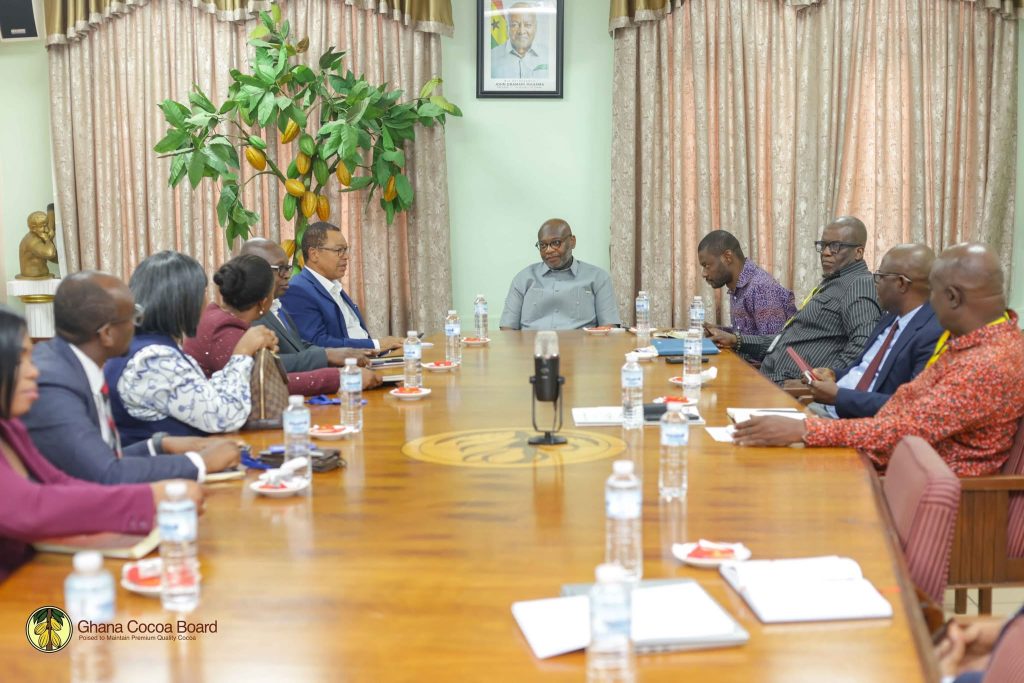
The Ghana Cocoa Board (COCOBOD) will abandon its long-standing reliance on syndicated foreign loans. It will adopt a domestic financing model to fund cocoa purchases for the 2026/27 crop season. Dr. Ransford Anertey Abbey, COCOBOD's Chief Executive, confirmed this significant policy shift.
This new financing arrangement will draw on Ghana's pension funds and cedi-denominated commercial papers and notes. The change is part of the government’s broader reforms to reduce dependence on foreign borrowing. It also aims to increase domestic value addition within the cocoa sector.
This move marks a departure from a financing model that has supported cocoa purchases for over three decades. The existing syndicated loan facility has become vulnerable to global cocoa price fluctuations and climate-related risks. It also limits efforts to expand domestic value addition by tying up nearly 80% of the country’s cocoa production. This new approach seeks to stabilize funding and empower local financial markets.
Dr. Abbey stated that Ghana can no longer rely solely on the syndicated loan facility. He explained that the current model hinders the nation's economic progress in the cocoa sector. The shift aligns with the government’s wider cocoa sector reform agenda to raise money domestically for cocoa operations.
COCOBOD has engaged fund advisers and managers to develop the operational framework for mobilising domestic capital. This preparation ensures a smooth transition to the new financing model. Dr. Abbey expressed confidence that the new model will be operational by August 2026. He expects it to attract strong investor interest and secure the necessary funding for cocoa operations.
Beyond financing reforms, COCOBOD is working to expand regional cooperation in the cocoa sector. Ghana encourages Nigeria and Cameroon to join the existing alliance with Côte d’Ivoire. A broader alliance would strengthen Africa’s bargaining power in the global cocoa market. These four countries collectively account for about 70% of world cocoa production. This initiative also supports increasing local processing and reducing raw cocoa bean exports.
Dr. Abbey made these remarks during discussions with officials of the Ghana International Bank (GHIB). The GHIB delegation commended COCOBOD’s management for their candid and constructive engagements. This engagement focused on the future financing of Ghana’s cocoa industry. The domestic financing model represents a strategic step towards greater financial independence and resilience for Ghana's vital cocoa sector.