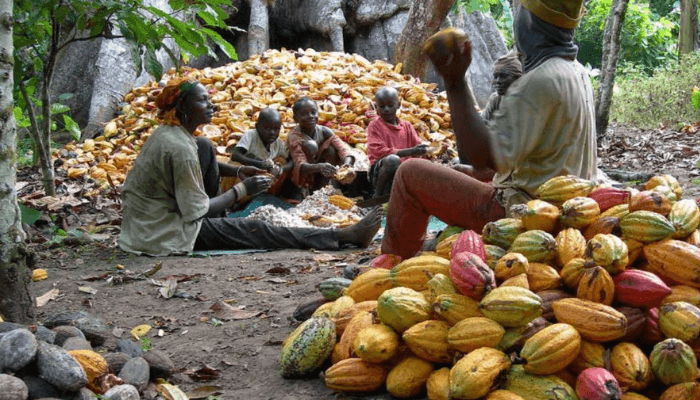
Ghanaian cocoa farmers have challenged the consultation process for a new bill aimed at reforming the cocoa sector. Anane Boateng, President of the Ghana National Association of Cocoa Farmers, stated that organized farmers were brought into discussions only after key legislative decisions had already been taken. This criticism highlights a significant gap in stakeholder engagement for a sector vital to Ghana's economy.
Mr. Boateng, speaking on JoyNews’ PM Express, argued that farmers were not adequately involved in shaping the bill. Farmers are the primary economic actors affected by rules governing cocoa production, pricing, and farm protection. His comments add to a broader debate about whether Ghana’s cocoa reforms truly reflect the experiences of those who cultivate the crop.
This issue fits into Ghana's ongoing efforts to modernize its agricultural sector and improve farmer livelihoods. The cocoa industry is a cornerstone of the Ghanaian economy, contributing significantly to export earnings and rural employment. Ensuring robust consultation is crucial for the successful implementation of any new policy framework, especially one impacting thousands of smallholder farmers.
“We are the key stakeholders in the cocoa industry, but they never ever consult us when it comes to such interventions,” Mr. Boateng said. He emphasized that policymakers often complete their work and then present it, rather than involving farmers from the outset. This approach, he argued, undermines the effectiveness and legitimacy of the reforms.
The implications of this limited consultation are far-reaching. While farmers support important provisions like the commitment to pay 70.00% of the free-on-board (FOB) price and stronger legal protection for cocoa trees, the lack of early involvement could lead to implementation challenges. Policy certainty and confidence in the regulatory framework are essential for farmers making long-term investment decisions regarding planting, rehabilitation, and inputs.
Mr. Boateng clarified that farmers do not oppose reform. He expressed strong support for the 70.00% FOB price commitment, noting that the new framework appears to make this policy more binding than previous arrangements. “What they told us was, one, the bill, the 70% FOB price, it’s now fixed that every year it will be, you know, every year they will make sure it will be paid to farmers,” he stated. This strengthened commitment could incentivize farmers to invest more in their farms, potentially boosting productivity and reducing cross-border smuggling.
He also welcomed provisions protecting cocoa trees from indiscriminate destruction, particularly in areas affected by illegal mining, known locally as 'galamsey'. “The area which I’m much, much happy about was the cocoa tree protection act area. That one, I like it very well because we had a lot of problems when it comes to galamsey issues,” Mr. Boateng said. He highlighted that farmers are often unfairly blamed for land release to miners, when traditional authorities or landowners may be responsible.
The timing of the engagement was a major point of contention. Mr. Boateng noted that farmer associations were invited to discussions only after the legislative process had advanced substantially. “When we were called at the office, the first question I asked the executives was that the bill had already passed. So this engagement, what is the purpose of engaging we, the farmers?” he recounted. This suggests a pattern where farmers are briefed rather than genuinely consulted, a problem Mr. Boateng believes predates the current government.
Moving forward, decision-makers must address these consultation concerns to ensure the new cocoa bill achieves its intended objectives. Genuine engagement with recognized farmer organizations from the early stages of policy development is crucial. This will not only foster greater trust but also lead to more practical and effective policies that benefit Ghana's vital cocoa sector and its farmers.