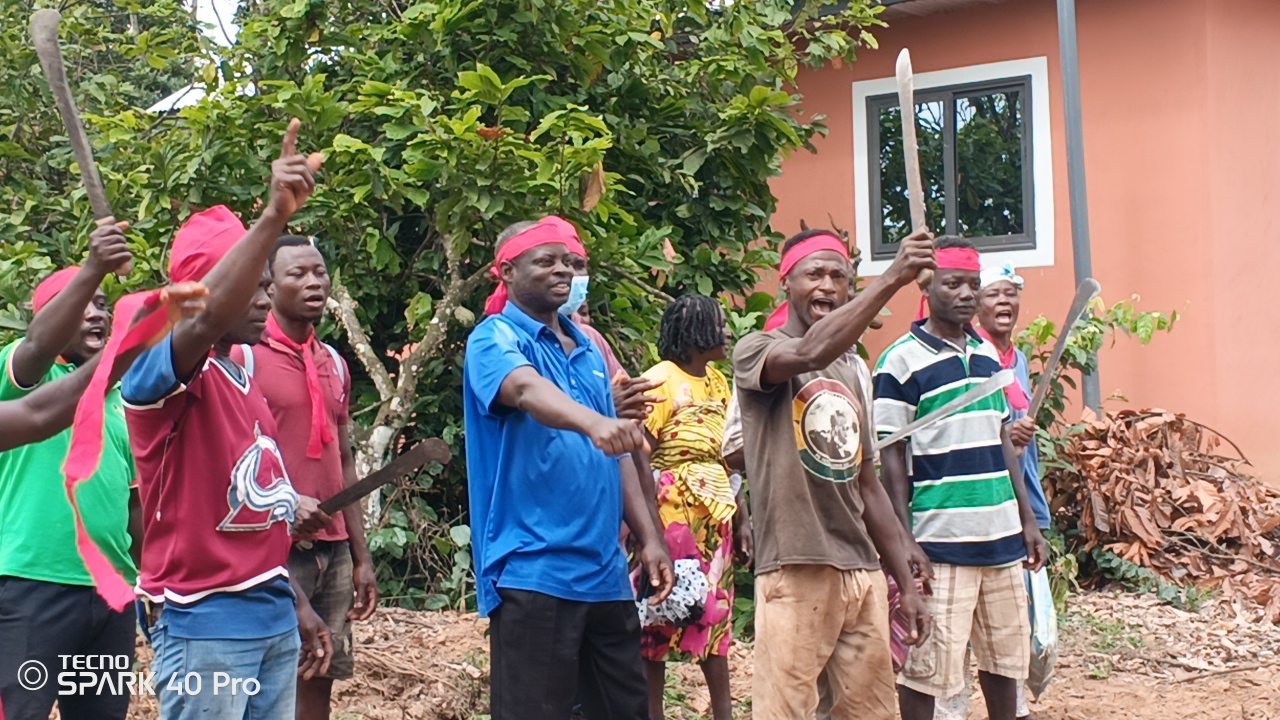
Cocoa farmers in Dunkwa-Atekyem, located in the Upper-Denkyira-East Municipality, have formally appealed to the Ghana Cocoa Board (COCOBOD) for urgent intervention. This appeal concerns a land dispute involving the alleged sale of approximately 99 hectares of their cocoa farms to private estate developers. The farmers claim this action by the Chief of Dunkwa, Nana Obeng Nuakoh III, threatens their generational livelihoods.
The affected farmers state their families have cultivated these lands for generations. Their great-grandparents acquired the lands from the then chief of Ayanfuri many decades ago. Mr. Samuel Ofori, a spokesperson for the farmers, confirmed that successive generations have depended on cocoa production from these farms. The alleged sale, conducted without consulting the farmers, puts their main source of income at severe risk.
This dispute highlights ongoing challenges with land tenure security in Ghana, particularly within the agricultural sector. Cocoa farming is a cornerstone of Ghana's economy, contributing significantly to export earnings and rural employment. Data from the Ghana Statistical Service indicates agriculture remains a major employer, making land disputes a critical economic issue. Such conflicts can deter investment and reduce productivity in a sector vital for national development.
Mr. Samuel Ofori stated that the alleged sale has left families facing the loss of their primary income source. Mrs. Oforiwaa Kumah, another farmer, joined the appeal for authorities to protect their livelihoods. When contacted, Nana Obeng Nuakoh III declined to comment, citing that the matter is currently before the law court. This legal process suggests a protracted resolution, adding uncertainty for the affected farmers.
The intervention of COCOBOD is crucial for resolving this dispute and safeguarding the livelihoods of these cocoa farmers. A swift resolution could prevent further economic hardship for the Dunkwa-Atekyem community. It would also reinforce confidence in land ownership for other farmers across Ghana. The outcome will be closely watched by agricultural stakeholders and land rights advocates. It will set a precedent for how similar land disputes are handled in the future. This situation underscores the need for clear land registration and dispute resolution mechanisms to protect vulnerable farmers. Ghana's cocoa sector relies on stable land access for its continued success. The government and traditional authorities must work together to ensure fair and transparent land administration. This will prevent such disputes from undermining agricultural productivity and rural economic stability.