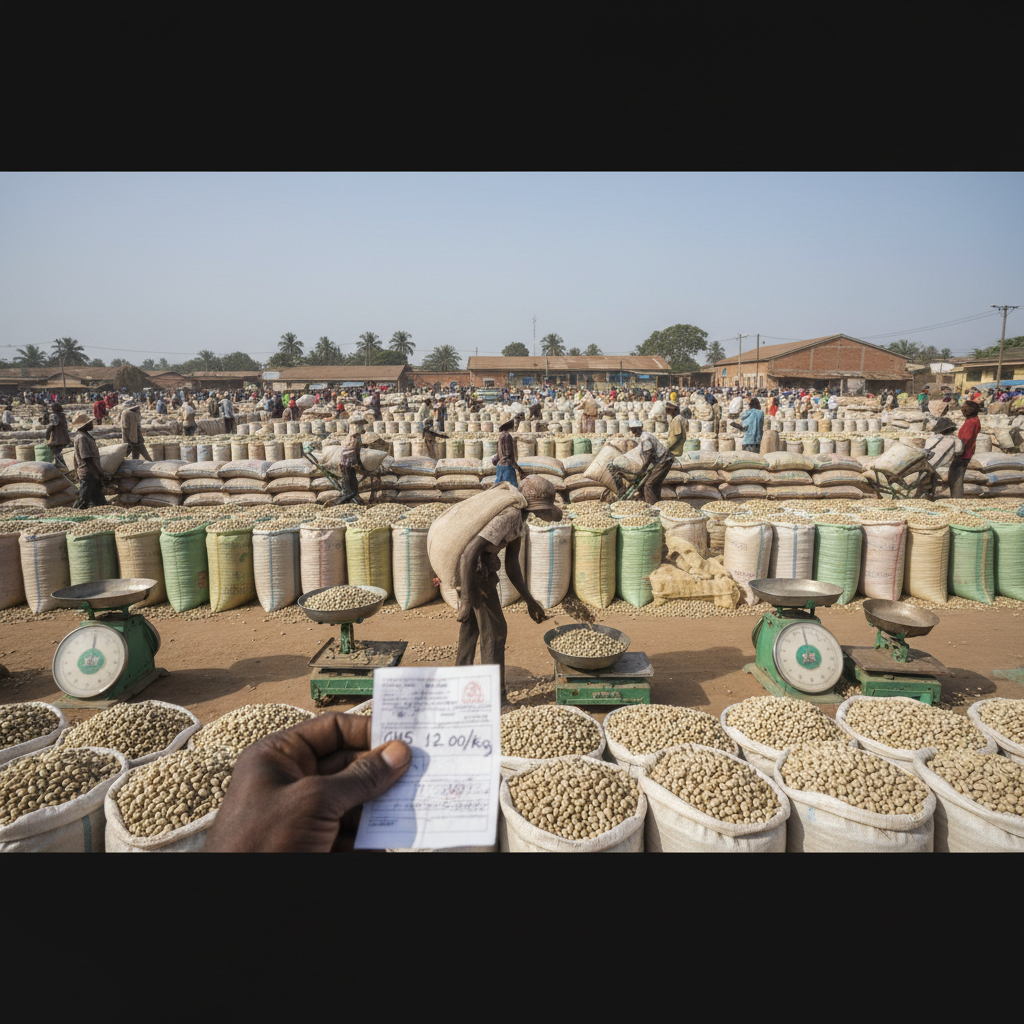
The Tree Crops Development Authority (TCDA) announced Ghana’s minimum producer price for cashew will be GHS 12.00 per kilogram for the 2026 season. This clarification disproves widespread claims of a GHS 25.00 per kilogram producer price. The government, through TCDA, increased the calculated minimum of GHS 11.16 per kilogram to GHS 12.00 per kilogram to offer additional support to farmers.
The TCDA stated that cashew prices are determined using a structured and consultative process. This process considers international Free on Board (FOB) prices, exchange rate movements, and operational expenditures. Essential stakeholders across the cashew value chain are also consulted during this determination.
This pricing framework fits into Ghana's broader economic strategy to boost agricultural incomes and develop value-added products. Cashew exports contribute significantly to the country's foreign exchange earnings. Ghana aims to enhance processing capabilities for cashew apples and nuts under its Agriculture for Economic Transformation (AET) agenda. This strategy seeks to create jobs and generate higher revenues from agricultural produce.
Dr. Andy Osei-Okrah, CEO of the TCDA, highlighted the official minimum producer price for cashew in 2024 was GHS 8.50 per kilogram. For the 2025 season, the highest producer price reached GHS 15.00 per kilogram. He emphasized that misinformation could undermine farmer confidence and market stability.
Ghana consistently offers some of the highest cashew producer prices in the West African sub-region. Current farmgate prices in neighboring countries range between GHS 7.15 and GHS 8.00 per kilogram. For example, farmers in Burkina Faso receive GHS 7.55 to GHS 7.80 per kilogram. Côte d’Ivoire’s prices range from GHS 7.85 to GHS 8.00. Benin’s producers get GHS 7.36 to GHS 7.50, and Togo’s receive GHS 7.15 to GHS 7.30 per kilogram. This competitive pricing reflects the government's commitment to ensuring fair returns for farmers.
Looking ahead, market participants and policymakers will monitor the effectiveness of these pricing policies on farmer livelihoods and export volumes. The TCDA plans to distribute three million elite cashew seedlings nationwide to boost production. Efforts to improve farmer incomes and promote value addition, such as increased processing of cashew apples, will also be watched. The deployment of 100 Compliance Officers aims to strengthen transparency and enforcement within the tree crops sector.