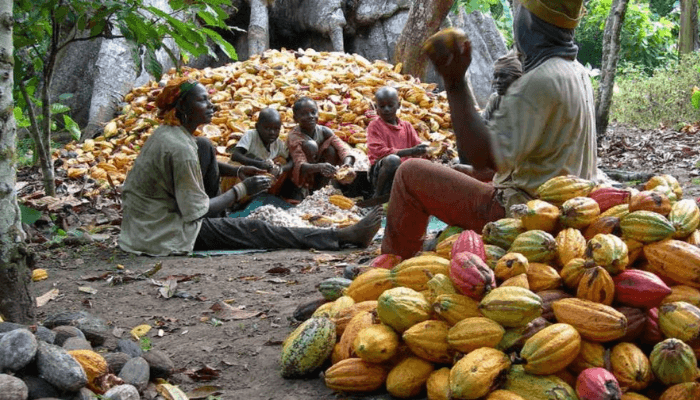
Cocoa farmers in Ghana’s Ashanti Region have welcomed the new Cocoa Board Bill, backing reforms that cover farmer welfare, producer pricing, and pension arrangements. This support emerged as the Ghana Cocoa Board (COCOBOD) began direct engagements with producers to explain the legislation. Farmers from Juaben, Asiwa, Juaso, and Konongo expressed their approval during a sensitisation rally in Konongo.
This rally, attended by over 400 people, was the first major farmer engagement since Parliament passed the Bill. It signals COCOBOD’s shift to move discussions from national media to the communities most affected. Dr. Richard Adu Acheampong, Executive Director of COCOBOD’s Cocoa Health and Extension Division, led the session. Benjamin Teye Larweh, Deputy Head of Public Affairs, also participated, outlining key provisions.
The new legislation arrives at a critical time for Ghana’s cocoa industry. The sector faces ongoing challenges from illegal mining, aging farms, smuggling, and financing constraints. For the government, the Bill aims to redefine how the sector protects productive assets and rewards farmers. It also seeks to reallocate responsibilities that have historically stretched COCOBOD beyond its core mandate.
COCOBOD officials used the Konongo engagement to correct misconceptions about the new law. They clarified that the legislation does not prevent farmers from cultivating food crops alongside cocoa. Officials also rejected claims that the Bill would transfer farm ownership to COCOBOD. Instead, farm protection provisions aim to prevent unlawful destruction and conversion of cocoa land to incompatible uses, like illegal mining.
This clarification on land rights is economically crucial for maintaining farmer confidence. Any perception of weakened control over property could generate resistance to reforms designed to protect farms. Precise communication about ownership, compensation, and enforcement is therefore essential as implementation proceeds. The Bill also seeks to narrow COCOBOD’s focus to core sector responsibilities.
Sarah Amoako, Municipal Chief Executive for Asante Akim North, highlighted provisions that restrict COCOBOD’s quasi-fiscal activities. These include cocoa-road construction, with local and central government institutions now expected to assume broader infrastructure responsibilities. This shift could be significant, as COCOBOD has historically managed duties beyond crop regulation and marketing. Removing such expenditures from its balance sheet could free up resources for productivity, disease control, and farmer support. However, cocoa communities will assess this change based on whether other state institutions effectively fill the infrastructure gap.
Farmers at the rally sought clarification on various issues, including the pension scheme and educational support for their children. They also raised concerns about illegal mining, cocoa roads, compensation, and agricultural financing. Their questions underscore that the legislation’s success will depend on its practical impact on incomes, farm security, and access to services. Participants called for sustained sensitisation and consultation across all cocoa-growing communities. This demand is important given past controversies, which showed how uncertainty over technical provisions can quickly shape public opinion and affect reform acceptance.