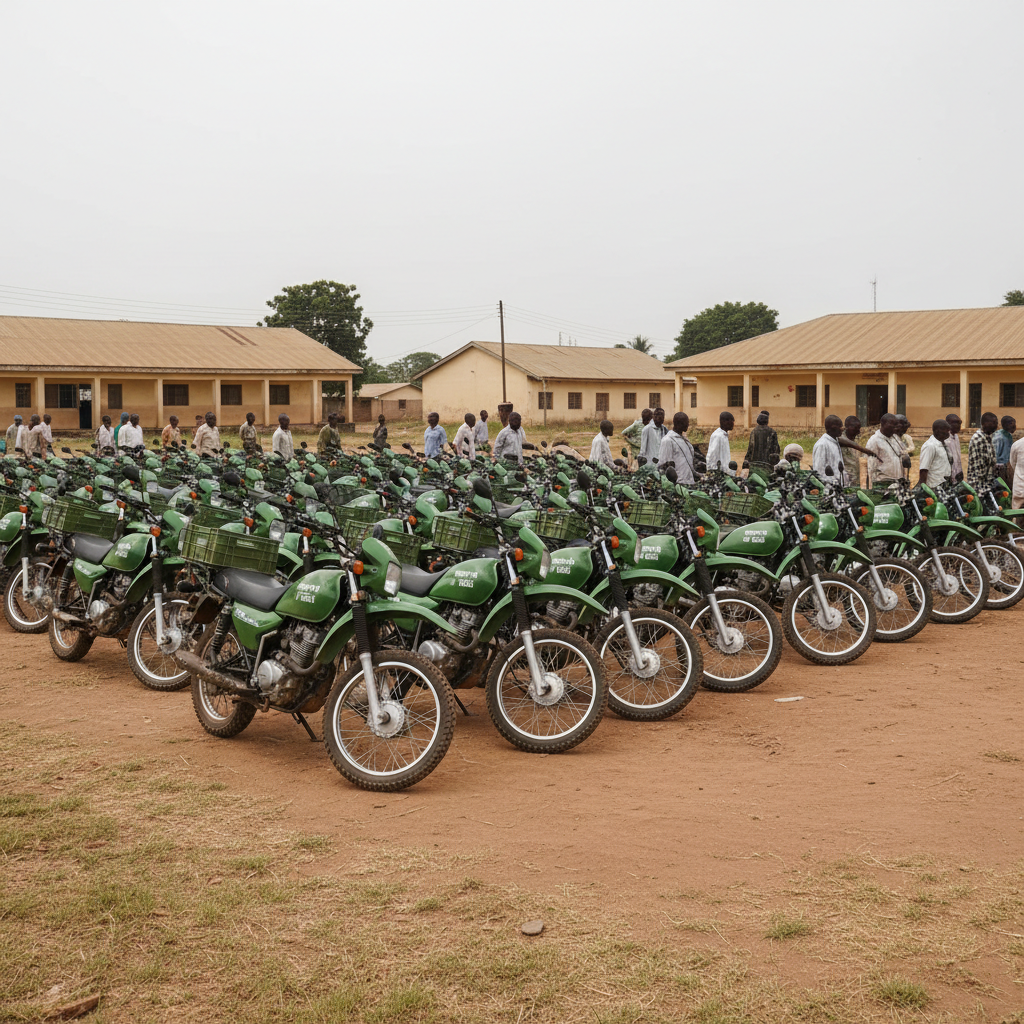
Ghana's Ministry of Food and Agriculture has procured 506 motorbikes for newly recruited agricultural extension officers. This initiative aims to enhance their operations and improve vital support services for farmers across the country.
The motorbikes will be distributed within two weeks after registration in the Ministry's name. This move directly addresses long-standing challenges within the agricultural extension system. A heavy workload currently impacts the limited number of officers available.
Ghana's agricultural sector is pivotal to its economy, employing a significant portion of the workforce. Despite its importance, the sector often faces challenges, including inadequate support for farmers. The ideal ratio of one extension officer to 500 farmers is rarely met, with many officers serving 1,500 farmers or more. This disparity hinders effective information dissemination and farmer training.
Sector Minister Eric Opoku addressed Parliament’s Assurance Committee on July 9, 2026. He stated, “One extension officer should serve a maximum of 500 farmers. Unfortunately, in our part of the world, one extension officer is serving 1,500-plus farmers.” Mr. Opoku questioned the effectiveness of officers under such conditions. He noted the government is gradually recruiting more officers amidst financial constraints.
The newly recruited officers, equipped with these motorbikes, will be strategically deployed. Their placement will target areas where their services are most needed to maximise their impact on farmer productivity. This phased recruitment approach indicates a sustained effort to strengthen agricultural support despite budgetary limitations. Improved extension services could boost crop yields and enhance food security.
The Ministry expects these motorbikes to significantly increase the officers' reach, allowing them to visit more farms. This direct engagement is crucial for providing technical advice, sharing modern farming techniques, and connecting farmers to necessary resources. Enhanced mobility also means quicker responses to farmers' needs and better monitoring of agricultural projects.
Beyond public sector efforts, Mr. Opoku encouraged private sector players in agriculture to request extension officer support from the Ministry. He confirmed that the Ministry has already received and acted on some private sector requests. This highlights a collaborative approach to agricultural development, leveraging both public and private resources.
The government's role is to create an enabling environment for private sector participation and provide essential support. The procurement of these motorbikes is a tangible step in this direction, aiming to strengthen Ghana's agricultural backbone. Decision-makers and market observers will monitor the impact of these deployments on agricultural output and farmer livelihoods in the coming months.