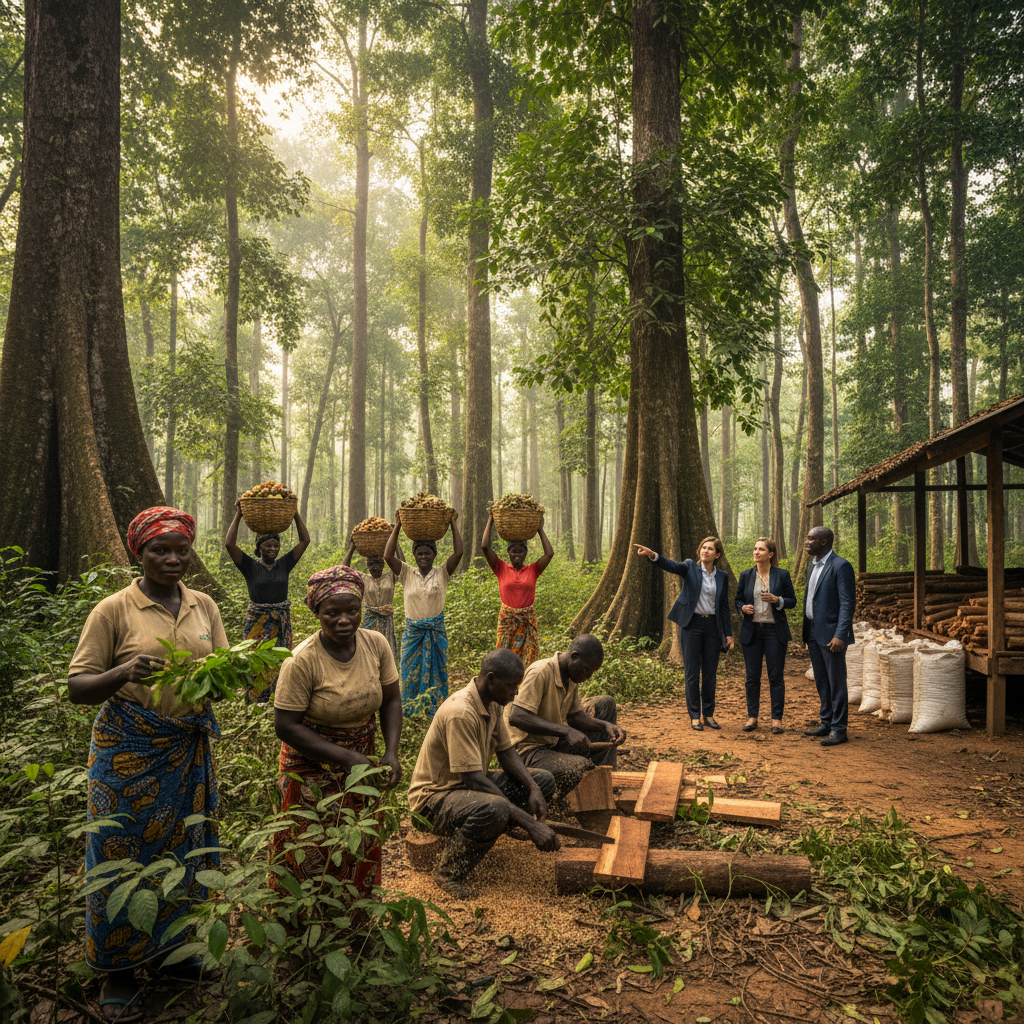
Africa's Forests Crucial for Livelihoods, AFF Studies Confirm

    New research from the African Forest Forum emphasizes the economic and environmental significance of forest resources across the continent.

    2 min read3 min listen
    Africa's Forests Crucial for Livelihoods, AFF Studies Confirm
    Africa's forests are crucial for building resilient livelihoods, protecting biodiversity, and strengthening economies. The African Forest Forum (AFF) has confirmed these findings through new research. Professor Labode Popoola, AFF Executive Secretary and Chief Executive Officer, highlighted this at a regional information-sharing webinar. The virtual event runs from June 8 to June 12, bringing together experts from across the continent. These discussions focus on evidence gathered from a series of studies on sustainable land management. The studies also cover biodiversity governance and forest-based livelihoods. This webinar is part of a transformation program supported by the Swedish International Development Cooperation Agency (Sida). The program aims to strengthen AFF's ability to improve lives and environmental stability. It achieves this by better managing Africa's forest and tree resources. The initiative focuses on four key areas: biodiversity conservation, renewable energy in forest biodiversity hotspots, knowledge sharing, and institutional transformation. These efforts aim to bridge the gap between scientific research and practical policy implementation. Over the past two years, researchers working with AFF completed 19 studies in selected African countries. These studies examined diverse issues, including biodiversity management and conservation. They also explored renewable biomass energy and effective forest governance. The findings are now being shared with governments, researchers, civil society groups, and development partners. Professor Popoola stated that Africa's diverse forests still hold great promise for resilient livelihoods and economies. He also acknowledged differing levels of progress across the continent, stressing the need for stronger collaboration. Professor Popoola called for collective action, strategic financing, and greater private sector involvement. This will help scale solutions that protect biodiversity. It will also improve the wellbeing of communities dependent on forest resources. He expressed gratitude to Sida for its long-standing financial support. This partnership has been instrumental in advancing sustainable forest management across Africa. The organization hopes these findings will guide policies and investments. This will safeguard Africa's biodiversity hotspots and improve lives for millions. Participants in the webinar will also review regional studies on the science-media landscape. They will learn from pilot projects demonstrating sustainable land management at the community level. The goal is to encourage active engagement and continued discussions beyond the event. This will strengthen knowledge exchange and support practical actions for forest preservation. This initiative underscores the economic importance of natural resources and their connection to human development.

    Comments

    More from StatsGH