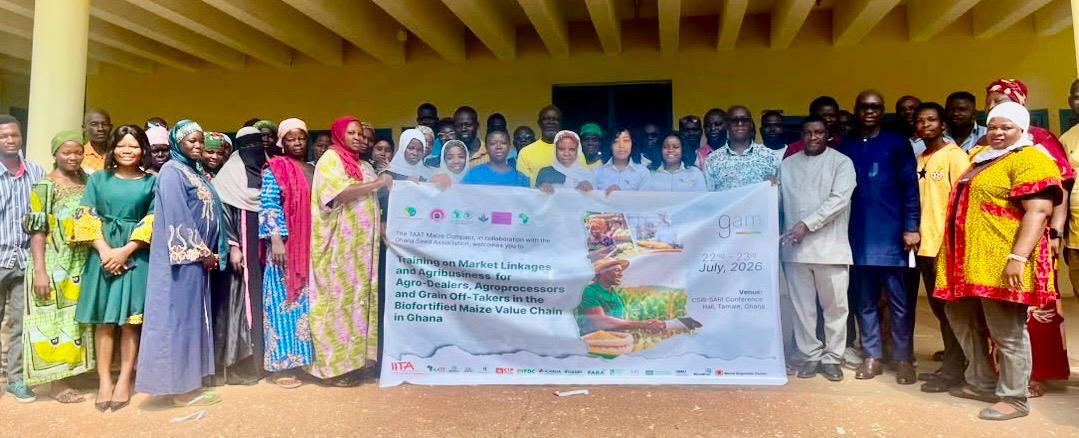
Sixty small and medium-scale enterprises (SMEs) have successfully completed training on the biofortified maize value chain. This program aims to strengthen their agribusiness and financial management capabilities. The training was a collaborative effort between the African Agricultural Technology Foundation (AATF) and the Council for Scientific and Industrial Research-Savanna Agricultural Research Institute (CSIR-SARI).
Participants, drawn from Ghana's Northern Region, included seed producers, grain producers, agro-dealers, aggregators, processors, and extension officers. The one-day training, held at Nyankpala near Tamale, covered essential topics. These included business planning, financial literacy, costing and pricing, bookkeeping, and grain quality standards. Post-harvest handling, aggregation, contract arrangements, market negotiation, and access to finance were also key areas of focus.
This initiative forms part of the Technologies for African Agricultural Transformation (TAAT) II Maize Compact Project. The project seeks to equip SMEs with practical knowledge and skills. This will improve their businesses, strengthen market linkages, and enhance access to finance. Biofortified maize, rich in iron and zinc, offers a dual benefit. It addresses nutritional deficiencies while creating new business opportunities across the agricultural sector.
Dr. Francis Kusi, Director of CSIR-SARI, stated the training's purpose was to strengthen the capacity of value chain actors. It also aimed to promote stronger business relationships, linking production to processing and profitable markets. He emphasized the potential of biofortified maize to tackle nutritional challenges and generate economic growth. Dr. Kusi urged participants to apply their new knowledge to improve their businesses and create better opportunities for maize producers.
Dr. Isaac Kodzo Amegbor, a Research Scientist at CSIR-SARI and Project Coordinator, explained the training is part of a larger effort. This effort ensures actors across the maize value chain acquire necessary knowledge. This knowledge is crucial for effectively handling and commercializing improved maize technologies. CSIR-SARI has established about 38 demonstration plots nationwide under the project. These plots expose farmers to locally developed maize varieties and their benefits. More than 8,000 farmers have directly benefited from various project activities, including seed production training and innovation platforms.
Dr. Desmond Sunday Adogoba, Innovations Scaling Specialist at CSIR-SARI, confirmed ongoing support for participants. After the training, they will receive assistance to refine their business plans. They will also be connected to available grant and funding opportunities. CSIR-SARI leverages its access to information on grants to link SMEs with suitable financial support. This ensures their well-developed business plans can attract necessary investment.
Miss Flavian Anyango, Project Assistant for Seed Systems at AATF, highlighted the Foundation's commitment. AATF works to scale up proven agricultural technologies. This improves farmers' productivity and livelihoods. The TAAT Maize Compact, implemented in partnership with national agricultural research institutions, seed companies, and farmer groups across 10 African countries, promotes climate-resilient and high-yielding maize varieties. While the project traditionally focused on maize production, this specific training addresses gaps further along the value chain. It strengthens the capacity of agro-dealers, processors, and grain aggregators. Madam Mariam Yakubu, a processor, praised the organizers for providing practical knowledge to improve businesses.